Minnesota AI Laws and Regulation (2026)
Minnesota has established itself as a national leader in AI regulation, becoming one of the first states to pass comprehensive deepfake legislation in 2023 and continuing to push ambitious AI bills through its 2026 legislative session. The state combines strong enacted laws on deepfakes and data privacy with an active pipeline of proposed legislation targeting AI in employment, healthcare, consumer protection, and child safety.
This guide covers every enacted law, executive action, and pending bill that affects how AI is developed, deployed, and used in Minnesota as of March 2026.
Enacted Minnesota AI Laws
Deepfake Criminal Law: Minn. Stat. 609.771 (Effective August 1, 2023)
Minnesota was among the earliest states to criminalize the use of deepfakes. The law, which took effect on August 1, 2023, targets two categories of harmful deepfakes: those used to interfere with elections and those depicting non-consensual intimate content.
The statute defines a "deep fake" as any video recording, motion-picture film, sound recording, electronic image, or photograph that is so realistic that a reasonable person would believe it depicts speech or conduct of an individual who did not in fact engage in such speech or conduct, and whose production was substantially dependent upon technical means rather than another individual's ability to physically or verbally impersonate the depicted person.
Election Deepfake Provisions
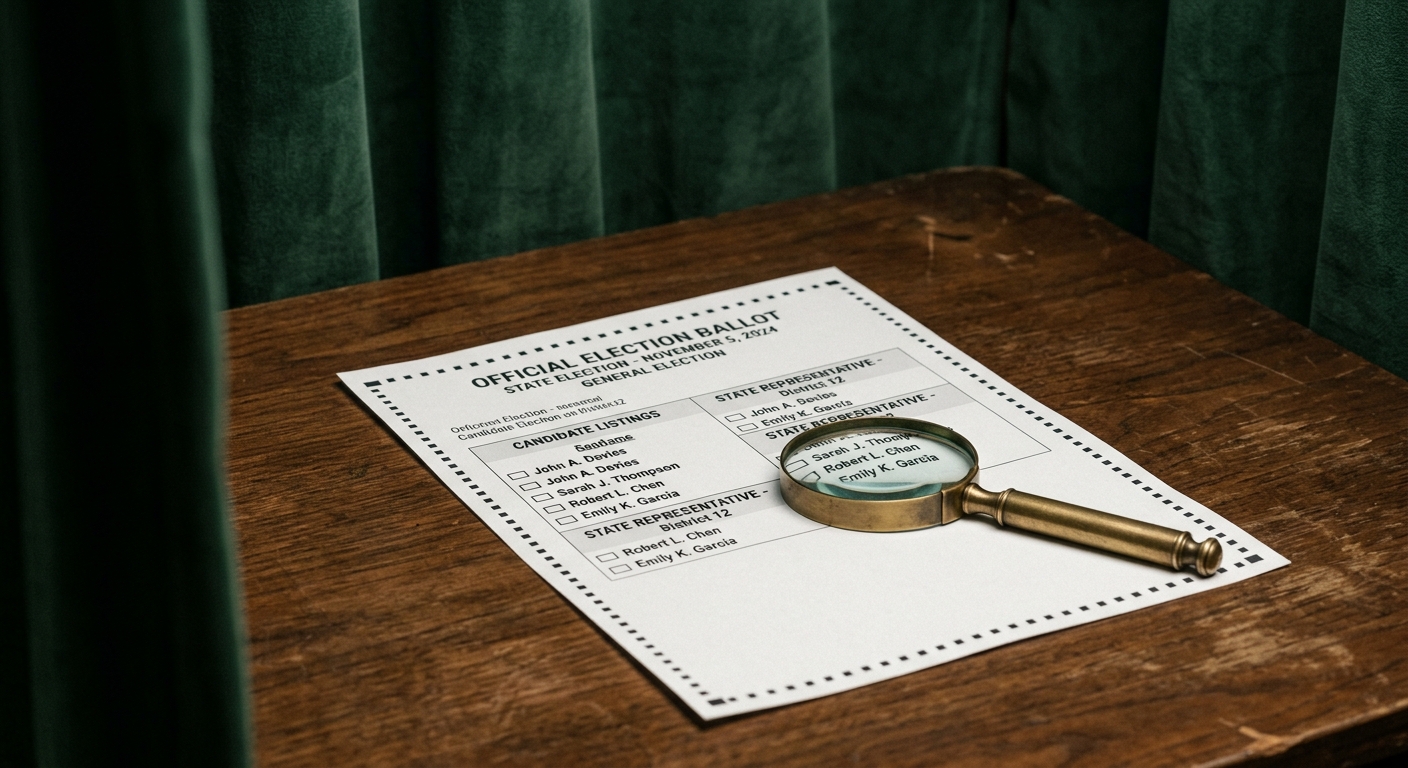
Under Section 609.771, it is a crime to disseminate or enter into an agreement to disseminate a deepfake if the disseminator knows or reasonably should know that the item is a deepfake and the dissemination occurs within 90 days before an election, is made without consent of the depicted person, and is made with the intent to injure a candidate or influence the result of an election.
The Minnesota Attorney General, county or city attorneys, depicted individuals, or candidates who are or are likely to be harmed by the deepfake's distribution can ask a court to intervene.
2024 Amendments to the Election Deepfake Law
In 2024, the Minnesota Legislature amended Section 609.771 with changes taking effect on July 1, 2024. The amendments expanded the temporal scope of the statute beyond the original 90-day window to also cover the period after the start of absentee voting and within 90 days before a general election. The Minnesota Secretary of State published a detailed overview of the updated requirements for candidates and campaigns.
A critical addition in the 2024 amendments requires candidates who knowingly distribute a deepfake in violation of the law to forfeit their office or nomination. This provision raises the stakes significantly for political actors who might consider using AI-generated deceptive content.
Criminal Penalties for Election Deepfakes
| Offense | Prison Time | Fine |
|---|---|---|
| First offense | Up to 90 days | Up to $1,000 |
| With aggravating circumstances | Up to 5 years | Up to $10,000 |
| Candidate violation | Forfeiture of office or nomination | Additional civil penalties |
X Corp. Lawsuit Challenging the Law
On April 23, 2025, X Corp. (formerly Twitter) filed a federal lawsuit against Attorney General Keith Ellison, alleging that Section 609.771 violates the First Amendment by curbing free speech and risks censoring political discourse. X Corp. argues the law is overbroad, vague, and a content-based restriction that infringes on editorial discretion.
In December 2025, a Minnesota federal judge denied X Corp.'s request for a preliminary injunction, finding that X had not shown it could be harmed by the law in a manner giving it standing to block enforcement. The lawsuit continues, and the outcome could have implications for deepfake laws in other states.
Civil Action for Intimate Deepfakes: Minn. Stat. 604.32
Minnesota's Section 604.32 creates a civil cause of action against any person who disseminates an intimate deepfake without the depicted individual's consent. This works alongside the criminal provisions to give victims multiple paths for justice.
What the Law Covers
A civil action exists when a person disseminates a deepfake with knowledge that the depicted individual did not consent, and the deepfake realistically depicts the intimate parts of another individual or artificially generated intimate parts presented as belonging to the depicted individual, or depicts the individual engaging in a sexual act.
Critically, the law states that consent to creating a deepfake does not constitute consent to its distribution. This closes a potential loophole that could otherwise protect distributors who obtain a deepfake from a consenting creator.
Civil Remedies and Damages
| Remedy | Amount |
|---|---|
| Damages equal to profits from distribution | Actual amount |
| Civil penalty | Up to $10,000 |
| Attorney fees | Full recovery |
| Court injunction or restraining order | Available |
| Daily fine for violating court order | Up to $1,000 per day |
Minnesota Consumer Data Privacy Act and AI (Effective July 31, 2025)
The Minnesota Consumer Data Privacy Act (MCDPA), codified at Chapter 325M, took effect on July 31, 2025, and includes some of the strongest AI-related provisions of any state data privacy law in the country. Nonprofit corporations and postsecondary institutions have until July 31, 2029, to comply.
AI and Automated Decision-Making Provisions
The MCDPA grants consumers whose data is subject to automated decision-making with significant legal or similar effects the right to be informed of the reason profiling resulted in a particular decision, along with guidance on actions they may take to secure a different outcome.
The law includes a unique provision granting consumers the right to question the results of "profiling" that scores individuals based on personal data to make automated decisions affecting access to jobs, housing, education, insurance, or other essential services. This right applies regardless of whether artificial intelligence is specifically used in the profiling process, capturing a broad range of automated decision systems.
Enforcement and Penalties
Until January 31, 2026, the Attorney General was required to issue a cure notice and allow 30 days for correction before initiating enforcement. After that date, the Attorney General has full enforcement authority. Violations are subject to civil penalties of up to $7,500 per violation.
Pending AI Bills in the 94th Legislature (2025-2026)
Minnesota has one of the most ambitious AI legislative agendas in the country. Senator Erin Maye Quade (DFL-Apple Valley) and Senator Eric Lucero (R-St. Michael) are leading a bipartisan effort to regulate AI with a sweeping slate of bills introduced in the current session.
RAISE Act: Frontier AI Model Safety (SF 4509)
Senate File 4509, the Responsible Artificial Intelligence Safety and Education Act, targets frontier-scale AI models. The bill would require AI developers to implement safety and security protocols, including documented technical and organizational procedures that reduce the risk of critical harm. Key provisions include:
- Requiring developers to maintain and publish safety and security protocols
- Establishing standards for harmful conduct that, without meaningful human intervention, would constitute a crime requiring intent, recklessness, or gross negligence
- Providing civil remedies for violations
- Mandating cybersecurity protections for AI models

AI Worker Displacement Protections (HF 4369)
House File 4369 would require employers with 50 or more full-time employees to provide notice and a transitional employment period when workers are displaced by AI. This is one of the most worker-protective AI proposals in the country.
Key provisions include:
- A 90-day transitional employment period from the date notice is provided
- Employers must offer affected employees participation in retraining or reskilling programs at the employer's expense
- Employers cannot discharge an employee during the transitional period except for just cause
- Employers who violate the requirements become ineligible for state grants, loans, or tax incentives for five years
- The Commissioner of Labor and Industry must maintain a public registry of violating employers
The bill defines "employment loss" broadly to include termination, layoffs exceeding six months, reduction in work hours of 50 percent or more, or conversion of a human-performed function to an automated function.
Healthcare AI Restrictions
SF 1856: Ban on AI in Utilization Review. Senate File 1856, introduced by Senator Maye Quade on February 24, 2025, would prohibit the use of artificial intelligence in any part of a utilization review organization's review, evaluation, determination, or appeals processes. The companion bill is HF 1838.
SF 4280/HF 3893: AI in Psychotherapy. These companion bills would regulate the use of AI in psychotherapy sessions, adding Minnesota to a growing number of states imposing restrictions on AI in mental health settings.
Consumer Protection Bills
SF 1886: AI Disclosure and Human Alternative. Senate File 1886 would require businesses using AI to provide individuals with the option to communicate with an actual human instead of a computer. The bill would also make it an unfair or deceptive trade practice when a person fails to disclose that an individual is communicating with AI that engages in a textual or verbal conversation.
HF 4131: Surveillance-Based Price and Wage Discrimination. House File 4131 would prohibit the use of automated decision systems that result in surveillance-based wage or price discrimination. The bill requires that a person using an automated decision system to set wages or prices must publish reasonable procedures allowing consumers or workers to challenge the accuracy of data considered by the system. This section would be effective August 1, 2026.
Children and AI Safety
SF 1857: Banning Minors from AI Chatbots. This bill would require companies that create AI chatbots to ensure that minors under 18 cannot access them. If passed, it would be one of the most restrictive child AI safety laws in the country.
Employment AI Regulation
HF 4445: Automated Decision Systems in Employment. This bill relates to employment and would regulate the use of automated decision systems in employment contexts, adding further protections for workers beyond the displacement protections in HF 4369.
Minnesota's Technology Advisory Council
Minnesota's Technology Advisory Council includes an Artificial Intelligence subcommittee that advises the state on AI governance and implementation. Through monthly meetings, the council has advanced initiatives addressing the state's technology needs, including AI adoption, data sharing, and privacy governance.
In 2024, the council formed a data-sharing workgroup to identify opportunities for secure, efficient data sharing while addressing governance and privacy challenges related to AI adoption. The workgroup is advancing toward becoming a formal subcommittee in 2025, strengthening its role in supporting interagency AI collaboration.
Federal AI Policy Impact on Minnesota
Minnesota's deepfake law has become a flashpoint in the national debate over federal versus state AI regulation. The X Corp. lawsuit raises questions about whether federal law, specifically Section 230 of the Communications Decency Act, preempts state deepfake regulations.
A December 2025 White House executive order on national AI policy framework has raised concerns about potential federal preemption of state AI laws. This could affect Minnesota's enacted deepfake statutes and pending bills if federal standards are established that conflict with or supersede state-level regulation.
The federal TAKE IT DOWN Act supplements Minnesota's existing intimate deepfake protections by adding a national prohibition on nonconsensual intimate images, including AI-generated content.
More Minnesota Laws
Looking for information on other Minnesota laws? Visit our AI Laws by State hub to compare Minnesota with other states. You can also explore related topics:
- Minnesota Surveillance Camera Laws for monitoring and recording rules
- Minnesota Background Check Laws for employment screening regulations
- Minnesota Recording Laws for wiretap and consent rules
This article is for informational purposes only and does not constitute legal advice. AI laws and regulations are evolving rapidly, and enforcement interpretations change over time. Consult a licensed attorney in Minnesota for advice about your specific situation. Last reviewed: March 2026.
Sources and References
- Minnesota Deepfake Law - New Laws (HF 1370)(house.mn.gov).gov
- Minn. Stat. 609.771 - Deepfake Criminal Statute(revisor.mn.gov).gov
- Minn. Stat. 604.32 - Civil Action for Nonconsensual Deepfakes(revisor.mn.gov).gov
- Minnesota Secretary of State - Deepfake Election Law Overview(sos.mn.gov).gov
- Minnesota Expands Elections-Related Deepfake Prohibitions (2024 Amendments)(kttc.com)
- Minnesota Attorney General - MCDPA Announcement(ag.state.mn.us).gov
- Minnesota Consumer Data Privacy Act (Chapter 325M)(revisor.mn.gov).gov
- SF 1856 - AI in Utilization Review Prohibition(revisor.mn.gov).gov
- SF 4509 - RAISE Act (Frontier Model Safety)(revisor.mn.gov).gov
- HF 4369 - AI Worker Displacement Protections(revisor.mn.gov).gov
- HF 4131 - Surveillance-Based Price and Wage Discrimination(revisor.mn.gov).gov
- Minnesota Technology Advisory Council Report 2024(mn.gov).gov
- X Sues to Stop Minnesota Election Misinformation Law(courthousenews.com)