Vermont AI Laws and Regulation (2026)

Overview of Vermont AI Laws
Vermont has taken a proactive approach to artificial intelligence governance. The state was one of the first in the nation to create a dedicated government AI oversight body when it enacted Act 132 in 2022, establishing both a Division of Artificial Intelligence and an AI Advisory Council. Since then, Vermont lawmakers have built on that foundation with enacted laws addressing election deepfakes and nonconsensual intimate imagery, while pursuing ambitious proposals on high-risk AI systems, healthcare AI, and automated employment decisions.
As of March 2026, Vermont has one comprehensive AI governance statute in effect (Act 132), one signed deepfake elections law (Act 75), an updated criminal statute covering deepfake pornography, and several pending bills that could significantly expand the state's AI regulatory reach.
This article covers Vermont's enacted and pending AI legislation, healthcare and employment proposals, and how federal policy interacts with the state's regulatory approach. This information is current as of March 2026, but you should consult an attorney for advice specific to your situation.
Act 132: Division of Artificial Intelligence (2022)
Vermont's foundational AI law is Act 132, which took effect on July 1, 2022. The law created a formal government structure for AI oversight within the executive branch, codified at 3 V.S.A. Chapter 69.
Division of Artificial Intelligence
The law established the Division of Artificial Intelligence within the Agency of Digital Services. The Division is administered by the Director of Artificial Intelligence, who is appointed by the Secretary of Digital Services. The Division's statutory responsibilities include:
- Reviewing all aspects of AI systems developed, employed, or procured in state government
- Proposing a state code of ethics for artificial intelligence use in government
- Making recommendations to the General Assembly on AI policies, laws, and regulations
- Reviewing the automated decision systems inventory created by the Agency of Digital Services
AI Advisory Council
Act 132 also created a Council on Artificial Intelligence, a diverse group of leaders who provide direction and oversight on AI matters. The Council works collaboratively with the Division, providing guidance that the Division then operationalizes across state government.
Automated Decision Systems Inventory
One of the law's practical requirements is that the Agency of Digital Services must conduct an inventory of all automated decision systems being developed, used, or procured by the state. This inventory requirement gives Vermont a baseline understanding of how AI is currently deployed across state agencies.
Act 75 (S.23): Synthetic Media in Elections (2026)
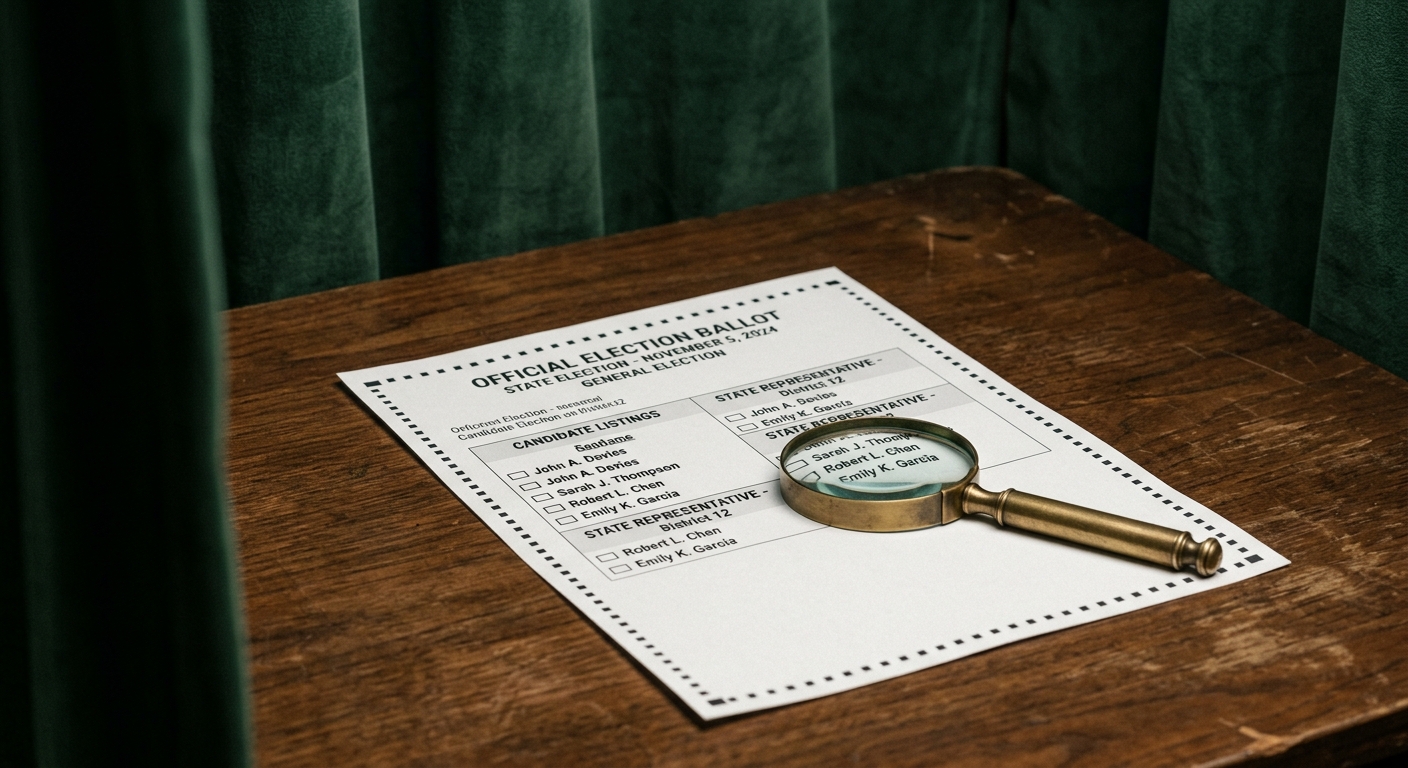
Governor Phil Scott signed S.23 into law on March 5, 2026, making it Act 75. The law regulates the use of AI-generated synthetic media in Vermont elections, establishing disclosure requirements and penalties for deceptive deepfakes used to influence voters.
What the Law Covers
Act 75 defines "deceptive and fraudulent synthetic media" as any digitally created or manipulated content that is intended to mislead voters, harm a candidate's reputation, or unduly influence the outcome of an election. This includes AI-generated images, audio, or video of a candidate's appearance, speech, or conduct created without the candidate's consent and designed to appear authentic to a reasonable person.
Disclosure Requirements
Within 90 days of an election, anyone publishing synthetic media that meets the deceptive standard must include a clear disclosure stating: "This media has been created or intentionally manipulated by digital technology or artificial intelligence." The law specifies formatting requirements that vary by media type to ensure the disclosure is prominent and accessible.
Penalties
| Violation | Fine Range |
|---|---|
| First offense | $1,000 to $5,000 |
| Repeated offenses or intent to cause harm | Up to $15,000 |
| Attempts to cause violence | Higher penalty tier |
In addition to fines, candidates whose image or speech is misrepresented through synthetic media can seek legal injunctions to prevent further distribution.
Exceptions
Act 75 provides exceptions for news broadcasts, satirical content, and telecommunications service providers. Content that is clearly identifiable as satire or parody is exempt from the disclosure requirements.
Nonconsensual Deepfake Pornography (2024)
In 2024, Vermont updated its revenge porn statute through H.878, explicitly criminalizing nonconsensual deepfake pornography. Attorney General Charity Clark praised the legislation for closing a gap in the state's existing criminal law.
Statutory Framework
The amendment updated 13 V.S.A. Section 2606, Vermont's existing nonconsensual pornography statute. The key change expanded the definition of "visual image" to include images created or altered by "digitization," which the statute defines as the process of altering an image in a realistic manner using an image or images of a person, including images other than the person depicted, or computer-generated images.
Penalties
A person violates the statute by knowingly disclosing a visual image of an identifiable person who is nude or engaged in sexual conduct, without consent, with intent to harm, harass, intimidate, threaten, or coerce the person depicted.
| Offense | Classification |
|---|---|
| Standard violation | Misdemeanor |
| Disclosure for financial profit | Felony |
The law became effective on June 6, 2024, as part of 2023 Act No. 161 (Adj. Sess.), Section 45.
Current Gap
Vermont is one of only a handful of states that has not yet specifically criminalized AI-generated child sexual abuse material (CSAM). While the deepfake pornography law covers adult victims, child exploitation through AI remains an area where additional legislation may be needed.
H.341: High-Risk AI Safety Standards (Pending)

House Bill 341, introduced on February 25, 2025, is Vermont's most ambitious AI proposal. Modeled in part after Colorado's SB 205, the bill would create comprehensive safety standards for developers and deployers of "inherently dangerous" AI systems.
Key Requirements
The bill would impose a duty of reasonable care on AI developers and deployers to prevent potential harm, including risks of discrimination, crime, psychological injury, and privacy violations. Specific requirements include:
- Risk documentation: Developers must document and disclose foreseeable risks associated with their AI systems, including risks from unintended or unauthorized uses
- Mitigation processes: Developers must outline risk mitigation processes to prevent potential harm
- Impact assessments: Both developers and deployers must conduct and make available assessments of their AI systems' impacts
Enforcement
The bill would give the Vermont Attorney General enforcement powers, including the ability to issue civil investigative demands and seek injunctions against non-compliant entities. It would also create a private right of action for consumers harmed by violations.
Small Business Protections
H.341 includes protections for small businesses and exceptions for certain research and contractual activities. The bill applies to businesses that are not classified as small businesses and either conduct business in Vermont or develop and deploy high-risk AI systems in the state.
Current Status
As of March 2026, H.341 was read for the first time and referred to the Committee on Commerce and Economic Development on February 25, 2025. The bill has not advanced from committee.
AI in Healthcare: H.814 and H.644 (Pending)

Vermont lawmakers have introduced two significant bills addressing AI use in healthcare and mental health services.
H.814: Neurological Rights and AI in Health Services
House Bill 814 is a groundbreaking proposal that would establish neurological rights protections while regulating AI in health and human services. The bill addresses several distinct areas.
Health insurance restrictions: H.814 would restrict health care insurers from using AI to deny, delay, or modify a customer's health care based on medical information. Instead, licensed human health care providers would make the final determination on coverage decisions.
Healthcare AI disclosures: The bill would require disclosures when generative AI is being used in health care settings. Patients would need to be informed when AI plays a role in their care or diagnosis.
Neurological rights: Perhaps the bill's most forward-looking provision, H.814 would create privacy standards for neural data collected through brain-computer interfaces. These devices use neural signals to control external devices such as robotic limbs.
Data protections: Patients would have to consent to share neural data and would be able to revoke that consent at any time, after which their records would be destroyed within 10 days. The bill would also prohibit electronic devices from bypassing the conscious decision-making of individuals who have not provided consent.
H.644: AI in Mental Health Services
House Bill 644 takes a more targeted approach, focusing specifically on regulating AI in mental health services. The bill addresses the growing use of AI chatbots and other tools that act as stand-ins for mental health professionals.
H.816: AI and Mental Health Professionals
Related to both bills, H.816 would regulate how mental health professionals use AI. The bill would prohibit practitioners from advertising mental health services that use AI to provide therapeutic judgment, diagnosis, or treatment.
Together, these three bills represent one of the most comprehensive state-level approaches to healthcare AI regulation proposed anywhere in the country.
AI in Employment: H.262 and H.340 (Pending)
Vermont has introduced multiple bills to regulate automated decision systems in the workplace.
H.262: Automated Decision Systems in Employment
House Bill 262, introduced on February 19, 2025, focuses specifically on AI in employment decisions. Key provisions include:
- Employers must provide detailed disclosures about automated decision systems used in the workplace
- Employers must outline specific categories of employee data collected and performance metrics considered
- Employers must disclose who developed and operates these systems
- Employees must be able to access impact assessment results
H.340: Broader Automated Decision Systems
House Bill 340, introduced on February 25, 2025, takes a broader approach to automated decision systems. The bill addresses AI in consequential decision-making processes across employment, housing, and public services. Key requirements include:
- Advance notice to and consent from individuals subject to automated decision tools
- Explanation of the qualifications and characteristics that AI will assess
- Regular impact assessments or bias audits of AI tools
- Disclosure of assessment results to affected individuals
Earlier Efforts
These bills build on earlier legislative efforts, including House Bill 114, introduced in January 2023, which sought to restrict electronic monitoring of employees and employment-related automated decision systems. While that bill did not pass, it helped establish the framework for the current proposals.
Federal AI Policy and Vermont
Executive Order 14365
Federal AI policy under Executive Order 14365 (December 2025) creates some tension with Vermont's regulatory efforts. The executive order establishes mechanisms to challenge state AI laws and conditions certain federal funding on states' regulatory approaches.
Impact on Vermont's Pending Legislation
Vermont's pending bills intersect with the federal framework in several ways:
H.341 (high-risk AI): As a comprehensive AI safety bill, H.341 could face the most scrutiny under EO 14365. The bill's broad requirements for AI developers and deployers may conflict with the federal government's position favoring lighter-touch regulation.
Act 75 (election deepfakes): Election regulation has traditionally been a state prerogative, and Act 75's narrow focus on deceptive synthetic media in elections likely falls within the state's protected authority.
Healthcare bills: The healthcare AI bills (H.814, H.644, H.816) address areas where state regulation has historically been robust, though federal preemption questions could arise if national healthcare AI standards emerge.
Vermont's Position
Vermont's existing AI governance structure through Act 132 gives the state a stronger foundation for defending its regulatory authority. The state can point to its established Division of Artificial Intelligence and AI Advisory Council as evidence of a thoughtful, rather than reactionary, approach to AI regulation.
Vermont's AI Regulatory Landscape
Vermont's approach to AI regulation reflects several distinguishing characteristics:
Early mover on governance: By establishing the Division of Artificial Intelligence in 2022, Vermont created institutional capacity for AI oversight before many states had begun considering the issue.
Healthcare focus: The cluster of healthcare AI bills (H.814, H.644, H.816) represents one of the most comprehensive state-level approaches to medical and mental health AI regulation.
Incremental approach: Vermont has built its AI framework gradually, starting with government oversight (Act 132), then addressing specific harms (deepfake pornography in 2024, election deepfakes in 2026), while considering broader regulation through pending bills.
Ambitious pending agenda: If H.341 and the healthcare and employment bills advance, Vermont could move from a governance-focused approach to one of the more comprehensive AI regulatory frameworks in the nation.
More Vermont Laws
Explore other Vermont law topics on Recording Law:
- Vermont Recording Laws
- [Vermont Data Privacy Laws](/us-laws/data-privacy-laws/vermont-data-privacy-laws)
- Vermont Whistleblower Laws
- Vermont Sexting Laws
Sources and References
- Act 132 - Division of Artificial Intelligence(legislature.vermont.gov).gov
- 3 V.S.A. Chapter 69 - Division of Artificial Intelligence(legislature.vermont.gov).gov
- Vermont Agency of Digital Services - Artificial Intelligence(digitalservices.vermont.gov).gov
- S.23 (Act 75) Bill Status - Synthetic Media in Elections(legislature.vermont.gov).gov
- Act 75 As Enacted - Synthetic Media in Elections(legislature.vermont.gov).gov
- Attorney General Clark - Criminalizing Nonconsensual Deepfake Pornography(ago.vermont.gov).gov
- 13 V.S.A. Section 2606 - Nonconsensual Pornography(legislature.vermont.gov).gov
- H.341 Bill Status - High-Risk AI Safety Standards(legislature.vermont.gov).gov
- H.814 Bill Status - Neurological Rights and AI in Health Services(legislature.vermont.gov).gov
- H.644 Bill Status - AI in Mental Health Services(legislature.vermont.gov).gov
- VPIRG - S.23 Passes Into Law(vpirg.org)