Michigan AI Laws and Regulation (2026)
Michigan has moved from having virtually no AI-specific laws to becoming one of the more active states in AI regulation in just two years. The state was an early mover on political deepfake disclosure, enacted strong protections against intimate AI deepfakes in 2025, and has a growing roster of pending bills that would regulate AI developers, workplace AI monitoring, and AI safety for children.
This guide covers every enacted law, executive action, and pending bill that affects how AI is developed, deployed, and used in Michigan as of March 2026.
Enacted Michigan AI Laws
Political Deepfake Disclosure Laws (Effective February 13, 2024)
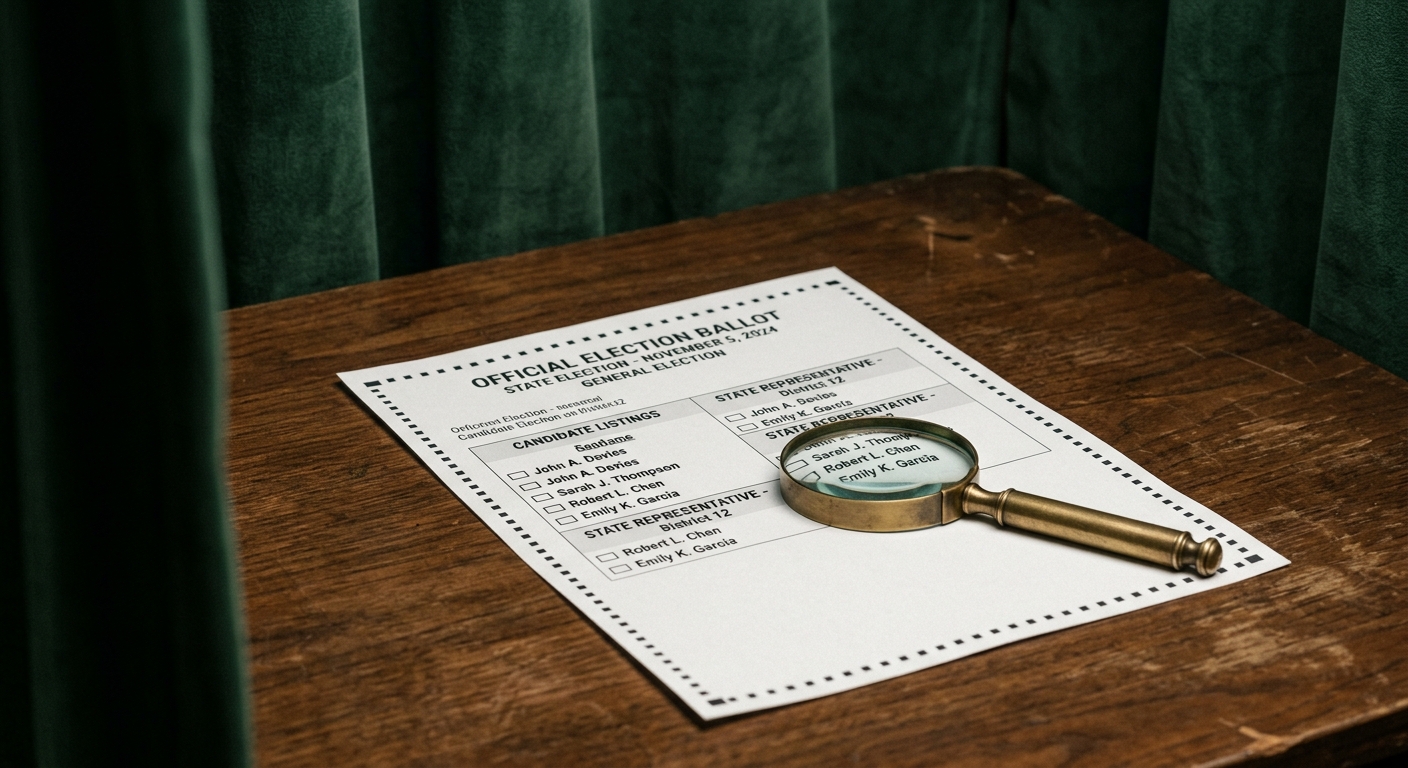
Michigan became the fifth state in the nation to regulate AI in political communications when Governor Whitmer signed a four-bill package in December 2023. HB 5141, HB 5143, HB 5144, and HB 5145 took effect on February 13, 2024.
The laws impose two main requirements on political communications that use AI-generated content.
AI Disclosure Requirements
Any person, committee, or entity that distributes a political advertisement using generative AI must clearly disclose that fact. The disclosure must state that the content was created using AI and must meet specific formatting standards:
- In print ads, the disclosure must appear in the same font size as the majority of the text
- In television ads, the disclosure must appear for at least four seconds in letters as large as the majority of any text in the ad
- In audio ads, the disclosure must be clearly audible
90-Day Deepfake Ban
Within 90 days of an election, AI-generated deepfakes are prohibited unless they include a separate disclaimer identifying the media as manipulated to depict speech or conduct that did not occur. For video content, this disclaimer must be clearly visible and appear throughout the entire video.
Penalties for Election Deepfake Violations
| Violation | Penalty |
|---|---|
| First violation | Misdemeanor: up to 93 days in jail, fine up to $1,000, or both |
| Subsequent violations | Enhanced penalties under Michigan election law |

Protection from Intimate Deep Fakes Act (August 2025)
On August 26, 2025, Governor Whitmer signed HB 4047 and HB 4048 into law, creating the Protection from Intimate Deep Fakes Act. The legislation passed with overwhelming bipartisan support, clearing the House on a 104-1 vote and the Senate unanimously at 32-0.
The law prohibits the creation or dissemination of AI-generated sexual content depicting a real, identifiable individual without consent. A deepfake becomes illegal under the act if it shows a person's intimate parts or a sexual act, the person is identifiable by their face, likeness, or other personal information, and it is created or shared without consent in a way that causes harm.
Criminal Penalties for Intimate Deepfakes
| Offense Level | Fine | Imprisonment |
|---|---|---|
| First offense (misdemeanor) | Up to $3,000 | Up to 1 year in jail |
| Aggravated offense | Up to $5,000 | Up to 3 years in prison |
| Repeat offense | Automatic felony charges | Enhanced sentencing |
Aggravating factors that trigger enhanced penalties include intention to profit from the deepfake, posting it online, causing financial loss to the victim, operating a website or app used to distribute deepfakes, or harassing, extorting, or threatening the victim.
Civil Remedies
The act also provides civil remedies for victims. Individuals depicted in intimate deepfakes can file civil lawsuits against creators or distributors, seeking economic and noneconomic damages for financial loss, emotional distress, or humiliation. Victims can file cases confidentially and may seek temporary restraining orders or permanent injunctions, with daily civil fines of up to $1,000 for violations of court orders.
Michigan Civil Rights Commission AI Resolution (October 2024)
On October 21, 2024, the Michigan Civil Rights Commission passed a resolution adopting Guiding Principles for the Elimination and Prevention of Artificial Intelligence Bias and Discrimination. While not carrying the force of law, the resolution establishes the Commission's framework for how civil rights principles should apply to AI.
Key Guiding Principles
The resolution calls for:
- Legislation to prevent algorithmic discrimination in AI systems
- Protections from privacy violations through AI design that creates or perpetuates inequity and bias
- A designated task force to determine and monitor that data collection conforms to reasonable expectations and that only strictly necessary data is collected
- The ability for people to opt out of AI-powered automated systems in favor of a human alternative, with necessary accommodations for persons with disabilities
Commission Chair Gloria Lara stated that "the use of AI is all but ubiquitous" and that "the speed and extent of its adoption demands we take seriously the dangers of disparate impacts on the people we are charged with protecting."
Michigan's AI Strategy and Economic Development
State Government AI Initiatives
Governor Whitmer's administration established an AI Core Team focused on creating strategies for responsible AI use within state government. The administration released Michigan's Artificial Intelligence Strategy, titled "AI with Purpose: Empowering People Through Intelligent Technology," which outlines the state's approach to adopting AI in government services.
In July 2025, the Michigan Unemployment Insurance Agency launched an AI-powered chatbot to provide key information for workers and employers navigating the unemployment system, demonstrating the state's practical application of AI in public services.
OpenAI Stargate Project
On October 30, 2025, Governor Whitmer announced that Michigan was selected for the OpenAI Stargate project, the largest single investment in the state's history. The multi-billion-dollar data center facility, built by Oracle and Related Digital in Saline Township, will span 250 acres and feature three 550,000-square-foot buildings.
The project is expected to create more than 2,500 union construction jobs, over 450 permanent on-site positions, and 1,500 additional jobs across Washtenaw County. Michigan was selected because of the state's strong workforce and bipartisan legislation Governor Whitmer signed to lower the cost of building high-tech AI infrastructure. Construction is expected to begin in early 2026.
Pending AI Bills in the 2025-2026 Session
Michigan has several significant AI bills under consideration in its current legislative session.
HB 4668: AI Safety and Security Transparency Act
House Bill 4668, introduced by Rep. Sarah Lightner (R-Springport) on June 24, 2025, would create the Artificial Intelligence Safety and Security Transparency Act. The bill is currently with the Judiciary Committee.
The bill targets large AI developers and would impose the following requirements:
Covered entities include companies that spend more than $100 million annually to develop foundational models and those that have spent $5 million or more on an individual model.
Safety protocol requirements. Beginning January 1, 2026, covered companies must produce, implement, and conspicuously publish a safety and security protocol. They must update and republish any material changes within 30 days and publish recurring transparency reports.
Critical risk standard. The bill defines "critical risk" as any risk that would result in the serious harm or death of more than 100 people or cause more than $100 million in damages. Covered developers must test their models for dangerous capabilities and enact safeguards to mitigate reasonable risks.
Penalties. A large developer that violates the provisions could face a civil fine of up to $500 per violation. If the Attorney General brings a civil action, fines could reach up to $1 million per violation.
Whistleblower protections. The bill includes protections for employees of AI developers who report safety concerns.
HB 5579: AI Employee Monitoring Restrictions
House Bill 5579, introduced by Rep. Penelope Tsernoglou (D-East Lansing) in February 2026, would establish strict limits on how employers can use AI to monitor employees.
Key provisions include:
- Prohibiting the use of automated decision-making tools (ADT) to make employment decisions, except in narrow job-related purposes such as screening large volumes of candidates
- Requiring employers to disclose and obtain consent from employees who are being monitored
- Limiting the types of data employers can collect
- Preventing employers from retaining monitoring records for more than three years
- Prohibiting employers from selling data on employees and job applicants
The bill is backed by the AFL-CIO, the Professional Employees Council of Sparrow Hospital, and the Communication Workers of America.
AI Chatbot Safety for Minors
Michigan's Legislature is considering a bill that would permit covered minors and their guardians to bring civil actions for damages, including punitive damages, against chatbot operators whose products are capable of encouraging self-harm, drug use, violence, illegal activities, or disordered eating. The bill would also target chatbots that offer mental health therapy to minors, engage in erotic or sexually explicit interactions with minors, or optimize engagement in ways that override required safety guardrails.
How Federal AI Policy Affects Michigan
Several federal developments directly affect Michigan's AI landscape. The federal TAKE IT DOWN Act supplements Michigan's Protection from Intimate Deep Fakes Act by adding a federal prohibition on nonconsensual intimate images, including AI-generated deepfakes.
Michigan Attorney General Dana Nessel joined 39 other state attorneys general in opposing federal efforts to preempt state deepfake laws. The coalition argues that states must retain the ability to enact and enforce their own protections against AI-generated harmful content, particularly as state laws often provide stronger protections than proposed federal standards.
A December 2025 White House executive action on eliminating state law obstruction of national AI policy has created tension between federal and state regulation. Michigan's pending AI bills, particularly HB 4668, could face challenges if federal preemption efforts advance.
Existing Laws That Apply to AI in Michigan
While Michigan lacks a comprehensive AI-specific statute, several existing laws apply to AI systems and their use.
Elliott-Larsen Civil Rights Act
Michigan's Elliott-Larsen Civil Rights Act prohibits discrimination in employment, housing, education, and public accommodations based on protected characteristics including race, religion, national origin, age, sex, height, weight, familial status, marital status, sexual orientation, and gender identity. As the Civil Rights Commission's resolution clarifies, these protections apply when AI systems produce discriminatory outcomes.
Consumer Protection Act
Michigan's Consumer Protection Act (MCL 445.901 et seq.) prohibits unfair, unconscionable, or deceptive methods, acts, or practices in trade or commerce. Businesses that deploy AI systems making false claims about their capabilities or that produce deceptive results may face liability under this statute.
More Michigan Laws
Looking for information on other Michigan laws? Visit our AI Laws by State hub to compare Michigan with other states. You can also explore related topics:
- Michigan Surveillance Camera Laws for monitoring and recording rules
- Michigan Background Check Laws for employment screening regulations
- Michigan Recording Laws for wiretap and consent rules
This article is for informational purposes only and does not constitute legal advice. AI laws and regulations are evolving rapidly, and enforcement interpretations change over time. Consult a licensed attorney in Michigan for advice about your specific situation. Last reviewed: March 2026.
Sources and References
- Michigan Becomes Fifth State to Regulate A.I. in Elections(citizen.org)
- HB 5141/5143 Bill Analysis - Campaigns and Artificial Intelligence(legislature.mi.gov).gov
- Governor Whitmer Signs Bills to Protect Michiganders from Sexual Exploitation(michigan.gov).gov
- HB 4047-4048 Bill Analysis - Protection from Intimate Deep Fakes Act(legislature.mi.gov).gov
- Michigan Civil Rights Commission Passes Resolution on AI Guiding Principles(michigan.gov).gov
- MDCR Resolution Adopting Guiding Principles on AI (Full Document)(michigan.gov).gov
- House Bill 4668 - AI Safety and Security Transparency Act(legislature.mi.gov).gov
- Stargate Announcement - Largest Investment in Michigan History(michigan.gov).gov
- Artificial Intelligence and Civil Rights - Michigan MDCR(michigan.gov).gov
- UIA Launches AI Chatbot for Workers and Employers(michigan.gov).gov
- Michigan Chamber - Lawmakers Propose AI Employee Monitoring Limits(michamber.com)