Alabama AI Laws and Regulation (2026)
Overview of Alabama AI Laws
Alabama does not yet have a single, comprehensive artificial intelligence law. However, the state has taken meaningful steps toward regulating AI through executive action, targeted legislation, and active legislative proposals during the 2026 session.
The state's approach to AI regulation has been shaped by two major forces. First, Governor Kay Ivey's 2024 executive order established a formal task force to study AI use in state government. Second, the growing national concern over deepfakes and AI-generated misinformation prompted the legislature to pass Alabama's first AI-specific criminal statute in 2024.
Alabama's 2026 legislative session, scheduled to adjourn on March 27, 2026, has seen multiple AI-related bills introduced. These proposals address topics ranging from healthcare coverage determinations to AI content labeling and child safety.
This article covers all enacted and pending Alabama AI legislation, the state's executive actions on AI, and how federal AI policy affects the state's regulatory landscape. This information is current as of March 2026, but you should consult an attorney for advice specific to your situation.
Alabama's Deepfake Law: HB 172
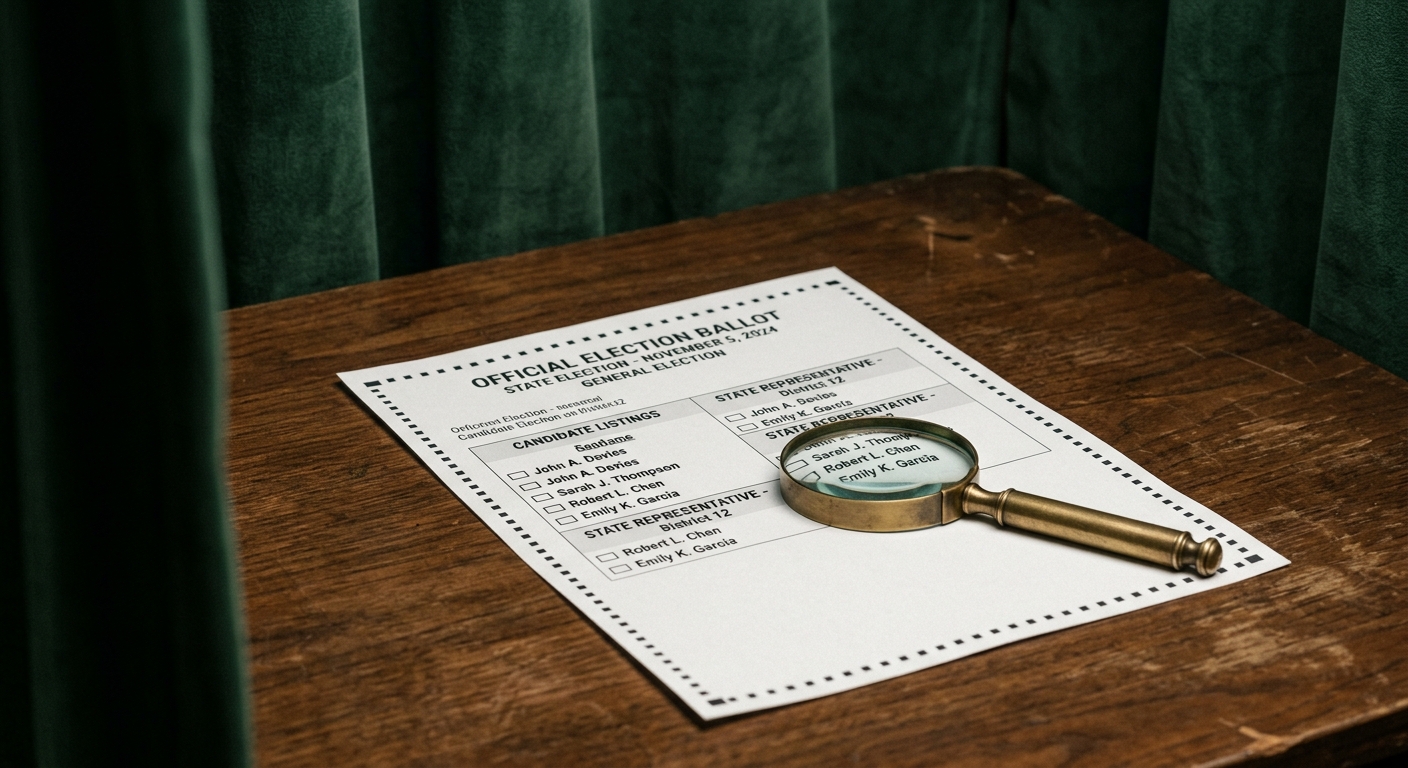
Alabama's most significant AI legislation to date is House Bill 172, which was signed into law on May 16, 2024, and took effect on October 1, 2024. The law specifically targets AI-generated deepfakes used to influence elections.
What the Law Prohibits
Under Ala. Code § 17-5-16.1, it is illegal to distribute materially deceptive media if the distributor knows the content falsely represents a person and intends to influence an election or harm a candidate's electoral prospects. The prohibition applies specifically within the 90-day period before an election.
The law defines "materially deceptive media" as content that falsely depicts a person making a statement or performing an action they never actually did, which a reasonable viewer might accept as authentic.
Criminal Penalties
| Offense | Classification | Maximum Jail Time | Maximum Fine |
|---|---|---|---|
| First offense | Class A misdemeanor | Up to 1 year | Up to $6,000 |
| Subsequent offense (within 5 years) | Felony | Varies by classification | Varies |
The escalation from misdemeanor to felony for repeat offenders demonstrates Alabama's serious approach to deterring election-related deepfakes.
Exemptions and Defenses
The law includes two important exemptions. First, if deceptive media includes a clear and conspicuous disclaimer stating that the content has been technologically manipulated, it does not violate the statute. Second, parody content is explicitly excluded from the law's scope, as confirmed by the Alabama Attorney General's office in October 2024.
Civil Remedies
In addition to criminal penalties, HB 172 also provides civil remedies. Individuals depicted in deepfake media may pursue civil action against the creator or distributor. This dual enforcement mechanism gives victims multiple avenues for recourse.
Executive Order 738: Alabama's AI Task Force
On February 8, 2024, Governor Kay Ivey signed Executive Order 738, establishing the Alabama Generative Artificial Intelligence Task Force. This order represented one of the state's first formal actions to address AI governance.
Task Force Composition
The task force consists of 13 members, including seven cabinet members, two representatives from Alabama higher education institutions, and four legislators (two state representatives and two state senators). Secretary Daniel Urquhart from the Office of Information Technology serves as chair.
Mandate and Timeline
The executive order required each state executive-branch agency to submit an inventory report of all GenAI use by May 1, 2024. The task force was charged with understanding current AI use in government, encouraging responsible adoption, and recommending policies for future use.
Over the course of 2024, the task force held four official meetings and twenty additional working group meetings, culminating in a final report submitted on November 30, 2024.
Key Findings
The task force report revealed that nearly 25% of Alabama state agencies were already using generative AI in some capacity. This finding highlighted the urgency of establishing clear governance frameworks.
The 10 Recommendations
The task force issued 10 formal recommendations, which included:
- Adoption of the NIST AI Risk Management Framework for state agencies
- Creation of a new state board to oversee generative AI development and use across agencies
- Implementation of a standard data classification framework for AI systems
- Establishment of human oversight requirements for AI monitoring and auditing
- Development of transparency protocols for documenting and publishing notices of AI use with state data
- Frameworks for AI workforce education and training
- Guidelines for GenAI procurement and development
- Protocols ensuring AI applications respect data ownership and privacy standards
- Responsible and ethical use policies
- Unique generative AI governance frameworks
These recommendations focus on government use of AI and do not directly regulate private sector AI activities.
2026 Legislative Session: Pending AI Bills
Alabama's 2026 legislative session has introduced several AI-related bills. While the session is scheduled to adjourn on March 27, 2026, many of these bills may not advance to passage during this cycle.
SB 63: AI in Health Insurance Decisions
Senate Bill 63, sponsored by Senator Arthur Orr (R-Decatur), addresses the use of AI in health insurance coverage determinations. The bill passed the Alabama Senate on February 19, 2026, and was approved by the House Committee on Insurance on March 17, 2026.
Key requirements of SB 63:
- A licensed healthcare professional must review and finalize every denied claim; AI systems cannot solely deny coverage
- If an insurer uses AI at any point during the coverage determination process, it must provide "prominent written disclosure" to affected parties
- The bill does not ban AI in health insurance; it establishes boundaries on how insurers can apply the technology
This bill reflects a nationwide trend of states requiring human oversight of AI-driven healthcare decisions.

SB 129: AI Content Disclosure
Senate Bill 129, filed by Senator Tim Melson (R-Florence), would require content created by AI to include a disclosure that it is AI-generated. The disclosure must be easy to see or hear and must not be removable. This proposal aligns with broader transparency efforts seen in states like California and their AI transparency laws.
HB 324: Chatbot Age Verification
House Bill 324 would require AI chatbots to implement age verification systems and prevent minors from interacting with AI that has "human-like features." This bill reflects growing concern about children's exposure to conversational AI systems.
JR 51: AI and Children's Internet Safety Study Commission
On February 12, 2026, Alabama legislators approved Joint Resolution 51, creating an AI and Children's Internet Safety Study Commission. This commission will study the intersection of AI technology and child safety online, potentially informing future legislation.
AI and Employment in Alabama
Alabama has not enacted specific legislation governing AI in employment decisions, such as automated hiring tools or algorithmic management. This contrasts with jurisdictions like New York City, which enacted Local Law 144 requiring bias audits of automated employment decision tools.
However, Alabama's existing employment and anti-discrimination laws do apply when employers use AI tools. Employers using AI in recruiting, scheduling, workforce analytics, or performance evaluation must ensure their AI systems comply with federal and state anti-discrimination protections.
The absence of specific AI hiring laws does not mean employers face no compliance obligations. AI systems that produce discriminatory outcomes in hiring or promotion decisions could expose employers to liability under existing civil rights frameworks, including Title VII of the federal Civil Rights Act and the Alabama Age Discrimination in Employment Act.
Federal AI Policy and Alabama
Executive Order 14365
On December 11, 2025, President Trump signed Executive Order 14365, titled "Ensuring a National Policy Framework for Artificial Intelligence." This order has direct implications for Alabama's AI legislative efforts.
The executive order creates several mechanisms to limit state AI regulation:
- DOJ AI Litigation Task Force: Empowered to challenge state AI laws on grounds of unconstitutional regulation of interstate commerce or federal preemption
- Legislative Recommendations: Directs federal officials to prepare recommendations for a uniform federal AI policy framework that would preempt conflicting state laws
- Funding Conditions: States with certain AI regulations may be blocked from receiving Broadband Equity Access and Deployment (BEAD) funding
Impact on Alabama
Alabama lawmakers have acknowledged the tension between state-level AI regulation and the federal executive order. However, several important carve-outs in EO 14365 preserve traditional areas of state authority, including:
- Child safety regulations
- AI compute and data center infrastructure
- State government procurement and use of AI
- Other traditional areas of state police power
Because federal preemption typically requires congressional action rather than executive orders, EO 14365 alone likely cannot displace Alabama's existing or proposed AI laws. Nevertheless, the threat of lost federal funding and DOJ challenges creates a chilling effect on state legislative ambitions.
Alabama's pending bills on child safety (HB 324, JR 51) and healthcare AI (SB 63) may fall within the protected carve-outs, making them less vulnerable to federal challenge.
Sexually Explicit Deepfakes
Alabama is among 46 states that have enacted laws addressing the creation or distribution of deepfakes depicting explicit sexual acts or other sensitive content. Alabama's existing criminal statutes on nonconsensual pornography and child exploitation apply to AI-generated content.
The 2026 legislative session has seen additional proposals targeting sexually explicit deepfakes, particularly those involving minors. These bills would explicitly criminalize the creation of AI-generated child sexual abuse material, closing potential loopholes in existing law.
Alabama's approach mirrors a national trend. State lawmakers across the country adopted 64 deepfake-related laws in 2025 alone, up from 52 the previous year, with sexually explicit material and political communications as the most common targets.
Looking Ahead: Alabama's AI Regulatory Future
Alabama's AI regulatory landscape remains a work in progress. The state has established a foundation through HB 172 and Executive Order 738, but comprehensive AI regulation has not yet materialized.
Several factors will shape Alabama's AI policy trajectory:
State-level dynamics: The AI Task Force's recommendations could inform future legislation, particularly around government AI use and procurement. The 2026 session's AI bills, even if they don't pass this cycle, signal legislative priorities that may return in future sessions.
Federal influence: Executive Order 14365 creates uncertainty about the scope of permissible state AI regulation. Alabama lawmakers will need to navigate this federal framework while addressing constituent concerns about AI safety and accountability.
Industry pressure: Alabama's growing technology sector and the presence of defense-related AI work at Huntsville's Redstone Arsenal create economic incentives to balance regulation with innovation.
National trends: As states like Colorado, California, and others enact comprehensive AI laws, Alabama may face pressure to adopt similar frameworks to protect its residents while remaining competitive for technology investment.
More Alabama Laws
Explore other Alabama law topics on Recording Law:
- Alabama Recording Laws
- [Alabama Data Privacy Laws](/us-laws/data-privacy-laws/alabama-data-privacy-laws)
- Alabama Whistleblower Laws
- Alabama Background Check Laws
- Alabama Sexting Laws
Sources and References
- Alabama HB 172 deepfake law with criminal sanctions(govtech.com)
- Alabama Executive Order 738 creating AI Task Force(governor.alabama.gov).gov
- Alabama HB 172 bill text (Ala. Code § 17-5-16.1)(legiscan.com)
- Governor Ivey releases GenAI Task Force final report(governor.alabama.gov).gov
- Alabama SB 63 health insurance AI regulation(legiscan.com)
- SB 63 passes Alabama Senate committee(alabamareflector.com)
- Alabama Office of Information Technology on AI Task Force(oit.alabama.gov).gov
- Executive Order 14365 on AI state preemption(whitehouse.gov).gov
- Alabama AI deepfake policy overview(ballotpedia.org)
- Alabama AG confirms HB 172 parody exemption(alreporter.com)
- Alabama agencies using generative AI report(statescoop.com)
- State AI laws under federal scrutiny analysis(whitecase.com)