Wisconsin AI Laws and Regulation (2026)
Wisconsin has taken a targeted approach to artificial intelligence regulation, enacting laws that address specific AI harms rather than creating a comprehensive AI governance framework. The state has passed laws requiring disclosure of AI-generated political ads and criminalizing AI-generated intimate imagery, while its insurance regulator has adopted national standards for AI use by insurers.
Despite active study by both a Governor's Task Force and a Legislative Council Study Committee, Wisconsin has not enacted broad AI consumer protection legislation. Several significant AI bills were introduced in the 2025-2026 session but failed to pass before the legislature adjourned. This article is for informational purposes only. Consult an attorney for advice specific to your situation.
Election Deepfake Disclosure Law (2023 Act 123)
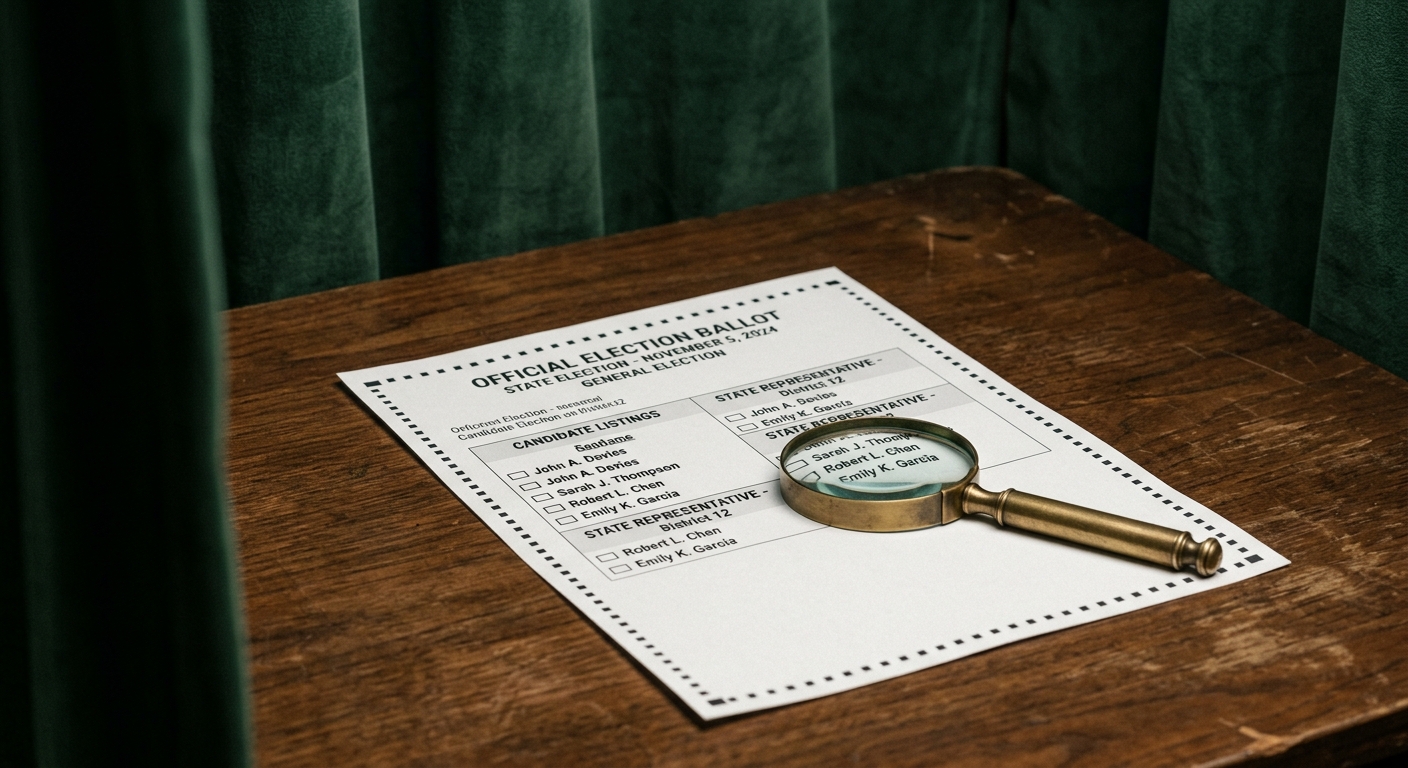
Wisconsin was among the first states to regulate AI-generated content in political communications. Governor Tony Evers signed 2023 Wisconsin Act 123 into law on March 21, 2024, creating new disclosure requirements for synthetic media in campaign advertising.
What the Law Covers
The law applies to audio or video communications that meet three criteria. First, the communication must be paid for by a candidate committee, legislative campaign committee, political action committee, independent expenditure committee, political party, recall committee, or referendum committee. Second, it must contain synthetic media. Third, it must contain express advocacy, issue advocacy, or support or opposition to a referendum.
The law defines "synthetic media" as audio or video content substantially produced by means of generative artificial intelligence. This definition is intentionally focused on AI-generated content rather than traditional editing or manipulation.
Disclosure Requirements
The required disclosures vary by media type. Every audio communication containing synthetic media must include the statement "Contains content generated by AI" at both the beginning and end of the communication.
For video communications, the disclosure "This video content generated by AI" must be displayed in a readable, legible, and readily accessible format. If the synthetic media appears only in the audio track of a video, the disclosure must state "This audio content generated by AI." When synthetic media is used in both the audio and video components, the disclosure reads "This content generated by AI."
Penalties and Enforcement
Violations of the disclosure requirement result in a forfeiture of up to $1,000 for each offense, enforced in the same manner as other violations of Wisconsin's campaign finance laws under Wis. Stat. 11.1303(2m).
Limitations
The law has notable gaps. It does not regulate manipulated media, sometimes called cheapfakes or shallowfakes, which can be as simple as mislabeling video or audio clips to suggest they are from a different time or location. The law also does not cover deepfake photos, applying only to audio and video communications.
Social media platforms are immunized from liability for hosting content that violates the disclosure requirements. Only the entity that paid for and distributed the communication can be held liable.
Synthetic Intimate Representation Law (2025 Act 34)
On October 2, 2025, Governor Evers signed 2025 Wisconsin Act 34 into law, expanding the state's criminal code to address AI-generated intimate imagery. The law amended Wis. Stat. 942.09, which governs representations depicting nudity.
Definition of Synthetic Intimate Representation
The law defines a "synthetic intimate representation" as a representation generated using technological means that uses an identifiable person's face, likeness, or other distinguishing characteristic to depict an intimate representation of that person. The definition applies regardless of whether the representation includes components that are artificial, legally generated, or generally accessible. The representation must be so realistic that a reasonable person would believe it depicts the actual conduct of the identifiable person.
Criminal Penalties
| Offense | Classification | Maximum Penalty |
|---|---|---|
| Creating a synthetic intimate representation with intent to coerce, harass, or intimidate | Class I Felony | Up to 3.5 years imprisonment, $10,000 fine |
| Posting, publishing, distributing, or exhibiting with intent to harass | Class I Felony | Up to 3.5 years imprisonment, $10,000 fine |
| Reproducing a private representation without consent | Class A Misdemeanor | Up to 9 months imprisonment, $10,000 fine |
| Violations involving a minor (under 18) | Class H Felony | Up to 6 years imprisonment, $10,000 fine |
Scope and Impact
Act 34 closed a loophole in Wisconsin law where AI-generated intimate images were not explicitly covered by existing statutes. The law adds synthetic intimate representations to the broader framework governing the capture, display, and distribution of intimate images without consent.
The law applies to content depicting identifiable adults and includes enhanced penalties when the depicted person is a minor. The intent requirement means that creating such content for purposes of harassment, coercion, or intimidation triggers the felony charge.
Insurance AI Regulation (OCI Bulletin, March 2025)

On March 18, 2025, the Wisconsin Office of the Commissioner of Insurance (OCI) issued a bulletin adopting the National Association of Insurance Commissioners (NAIC) Model Bulletin on the use of artificial intelligence systems in insurance. Wisconsin became the 24th state to adopt the model bulletin.
Key Requirements for Insurers
The bulletin establishes that all decisions or actions impacting consumers that are made or supported by AI systems must comply with all applicable insurance laws and regulations, including those related to unfair trade practices and discrimination.
All insurers are expected to develop, implement, and maintain a written program (an "AIS Program") for the responsible use of AI systems. This program must be designed to mitigate the risk of adverse consumer outcomes when AI systems are used to make or support decisions related to regulated insurance practices.
Program Components
At a minimum, the written AI program must address several areas. Insurers must establish appropriate governance structures for AI oversight. They must provide consumer notices when AI systems affect decisions. They must implement risk management programs covering both internal AI systems and third-party AI tools. They must also develop a plan for responding to inquiries from regulators about their AI use.
Ongoing Obligations
The OCI bulletin encourages the development and use of verification and testing methods to identify errors and bias in predictive models and AI systems. While the bulletin functions as regulatory guidance rather than a statute, regulated entities are expected to follow its requirements. Noncompliance could result in regulatory action under existing insurance statutes.
Governor's Task Force on Workforce and AI
Governor Tony Evers created the Governor's Task Force on Workforce and Artificial Intelligence to study AI's impact on Wisconsin's labor market. The Task Force met from early 2024 through its final meeting on July 22, 2024, in Madison, and published its comprehensive advisory action plan in July 2024.
Task Force Mandate
The Task Force was charged with gathering and analyzing information to identify the current state of generative AI's impact on Wisconsin's labor market. Its responsibilities included developing informed predictions about AI's opportunities and impacts, identifying how these workforce changes may affect Wisconsin's key industries and occupations, exploring initiatives to advance equity and economic opportunity, and recommending policy directions related to workforce development and education.
Key Recommendations
The Task Force's action plan covered three main areas.
In workforce development, the Task Force recommended enhancing apprenticeship infrastructure to incorporate AI skills, extending the Worker Connection program to include AI training, and expanding the Wisconsin Fast Forward program to fund employer-led AI training. It also proposed an AI Workforce Talent Pipeline program to raise awareness and provide training in AI-related occupations, with an emphasis on underrepresented populations.
In economic development, the recommendations included providing AI supports for Wisconsin businesses, creating AI Innovation Hubs to incubate startups, and developing an AI Roadmap for businesses to explore AI's potential.
In education, the Task Force recommended starting AI-related digital literacy at the K-12 level with equitable access across all grade levels and academic areas. It emphasized balancing technological skills with human-centered skills, which the Task Force noted would become increasingly valuable as automation grows.
Legislative Council Study Committee on AI Regulation
In addition to the Governor's Task Force, the Wisconsin Joint Legislative Council created the 2024 Study Committee on the Regulation of Artificial Intelligence in Wisconsin. This legislative body was directed to review current uses of AI technology and make recommendations for legislation.
Committee Composition
The committee included four lawmakers: Sen. Julian Bradley (R-New Berlin), Rep. David Armstrong (R-Rice Lake), Sen. Tim Carpenter (D-Milwaukee), and Rep. Clinton Anderson (D-Beloit). Eight members of the public also served on the committee, bringing expertise from various sectors.
Study Process
The committee met monthly from July through December 2024, hearing from stakeholders about AI uses in the state, potential problems, and how to address them. The committee considered proposals for applying existing state laws to AI models in the same way those laws apply to humans, including when it comes to disinformation, impersonation, and creating and distributing fake imagery.
Recommendations
The committee considered recommending the creation of an ongoing, permanent body to continue studying AI regulation after the study committee completed its work. The committee's final recommendations were submitted to the Joint Legislative Council for consideration in the 2025-2026 legislative session.
Failed AI Bills in the 2025-2026 Session
The Wisconsin legislature adjourned its 2025-2026 session on March 19, 2026, without passing several AI-related proposals. These bills indicate the directions Wisconsin lawmakers may pursue in future sessions.
AB 840: AI Regulatory Review Council
Assembly Bill 840 would have created an Artificial Intelligence Regulatory Review Council within the Department of Agriculture, Trade and Consumer Protection. The council would have been required to submit biennial reports to the governor and legislative standing committees with recommendations for AI regulation. The bill included funding for one new state position to support the council's work.
The bill was introduced on January 9, 2026, by Representatives Zimmerman, Born, Allen, Armstrong, and others, and cosponsored by multiple senators. It did not pass before the session ended.
SB 939 / AB 965: AI Systems and Children
Senate Bill 939 and its companion Assembly Bill 965 would have created Wis. Stat. 100.80 to regulate artificial intelligence systems that simulate humanlike relationships with children, including a penalty provision. Both bills failed to pass when the session ended.
AB 1109: AI and Medical Prior Authorization
Assembly Bill 1109 would have restricted the use of artificial intelligence to deny prior authorization for medical treatments based on medical necessity or experimental status. The bill addressed growing concerns about health insurers using AI to automatically deny coverage requests. It did not advance before the session concluded.
AI in Employment
Wisconsin has not enacted specific legislation governing the use of AI in employment or hiring decisions. The state relies on existing anti-discrimination frameworks rather than AI-specific employment statutes.
However, Wisconsin's general employment anti-discrimination laws under the Wisconsin Fair Employment Act apply to decisions made with AI tools. Employers using AI-powered hiring tools, performance evaluation systems, or workforce analytics must ensure those tools do not produce discriminatory outcomes based on protected characteristics.
The Governor's Task Force on Workforce and AI acknowledged the significant impact AI is having on employment and made workforce development recommendations, but stopped short of proposing specific employment AI regulations.
Federal AI Policy and Wisconsin
Wisconsin lawmakers have engaged with federal AI policy discussions, though the state has not taken as public a stance as some others.
Federal Preemption Concerns
The Trump Administration's December 2025 Executive Order 14365 directed the Department of Justice to create an AI Litigation Task Force to challenge state AI laws. While Wisconsin's enacted AI laws are relatively narrow in scope, the state's election deepfake and synthetic intimate imagery laws could theoretically face federal scrutiny. However, the executive order carved out child safety protections and state government procurement from potential preemption.
National Policy Framework
The Trump Administration released a National Policy Framework for Artificial Intelligence in March 2026, calling on Congress to pass federal legislation. If Congress enacts a broad federal AI law with preemption provisions, Wisconsin's state-level regulations could be affected, particularly the election deepfake disclosure law.
Wisconsin lawmakers have expressed interest in maintaining state authority over AI regulation despite federal pressure, signaling that the state may continue pursuing its own approach to AI governance.
Summary of Wisconsin AI Laws and Regulations
| Law/Regulation | Year | Subject | Status |
|---|---|---|---|
| 2023 Act 123 | 2024 | Election deepfake disclosures | Enacted (March 21, 2024) |
| 2025 Act 34 | 2025 | Synthetic intimate representations | Enacted (October 2, 2025) |
| OCI Bulletin (NAIC Model) | 2025 | Insurance AI governance | Effective (March 18, 2025) |
| AB 840 | 2026 | AI Regulatory Review Council | Failed |
| SB 939 / AB 965 | 2026 | AI-child relationships | Failed |
| AB 1109 | 2026 | AI medical prior authorization | Failed |
More Wisconsin Laws
- Wisconsin Recording Laws
- [Wisconsin Data Privacy Laws](/us-laws/data-privacy-laws/wisconsin-data-privacy-laws)
- Wisconsin Surveillance Camera Laws
- Wisconsin Background Check Laws
- Wisconsin Whistleblower Laws
Sources and References
- 2023 Wisconsin Act 123 - Election Deepfake Disclosures(docs.legis.wisconsin.gov).gov
- 2025 Wisconsin Act 34 - Synthetic Intimate Representations(docs.legis.wisconsin.gov).gov
- Wisconsin Statute 942.09 - Representations Depicting Nudity(docs.legis.wisconsin.gov).gov
- OCI Bulletin - AI Systems in Insurance (March 18, 2025)(oci.wi.gov).gov
- Governor's Task Force on Workforce and Artificial Intelligence(dwd.wisconsin.gov).gov
- 2024 Legislative Council Study Committee on AI Regulation(docs.legis.wisconsin.gov).gov
- Wisconsin Legislature AI Subject Index (2025)(docs.legis.wisconsin.gov).gov
- Assembly Bill 840 - AI Regulatory Review Council(docs.legis.wisconsin.gov).gov
- Senate Bill 939 - AI Systems and Children(docs.legis.wisconsin.gov).gov
- Wisconsin Lawmakers Eye AI Regulations Despite Federal Pressure(wisbusiness.com)