Oregon AI Laws and Regulation (2026)

Oregon has emerged as one of the most active states in addressing artificial intelligence through targeted legislation rather than a single comprehensive AI framework. Since 2024, the state has enacted laws governing deepfakes in elections and intimate imagery, restricted AI from impersonating healthcare professionals, and advanced groundbreaking chatbot safety regulations. The Oregon Attorney General has also issued formal guidance applying existing state laws to AI systems.
This article covers every enacted Oregon AI law, pending legislation, executive guidance, and relevant federal considerations as of March 2026.
This article is for informational purposes only and does not constitute legal advice. Consult an Oregon-licensed attorney for guidance on specific situations.
SB 1571: AI Disclosure in Political Campaigns (Enacted 2024)
Oregon was among the earliest states to regulate AI in elections. Senate Bill 1571, enacted on March 5, 2024, requires campaigns to disclose the use of synthetic media in political communications.
What the Law Requires
SB 1571 amends ORS 260.345 to require that any campaign communication using artificial intelligence to depict a person's voice or image must include a clear disclosure. This applies to all campaign materials, from physical fliers to online videos.
The disclosure requirement covers any use of AI or digital technology to manipulate an image, audio, or video in an attempt to influence voters.
Enforcement and Penalties
The Oregon Secretary of State enforces the disclosure requirement. In cases involving candidates for Secretary of State, enforcement shifts to the Attorney General.
Violations can result in:
- Court injunctions blocking the use of non-compliant campaign materials
- Fines of up to $10,000 per violation
Oregon's Transparency Approach
Unlike many other states that have imposed criminal penalties for election deepfakes, Oregon focused on proactive transparency. The law does not criminalize the creation of synthetic media; rather, it mandates disclosure so voters can evaluate the authenticity of campaign content.
The act declared an emergency, taking effect immediately upon passage rather than waiting for the standard effective date.
HB 2299: AI-Generated Intimate Image Protections (Enacted 2025)
The Oregon legislature unanimously passed House Bill 2299 in 2025, expanding the state's existing intimate image laws to cover AI-generated deepfakes. The law took effect on January 1, 2026.
Changes to Oregon Law
HB 2299 amends ORS 163.472 (unlawful dissemination of an intimate image) to expand the legal definition of "image." The updated definition now explicitly includes "a digitally created, manipulated or altered depiction that is reasonably realistic," in addition to traditional photographic and video formats.
What the Law Prohibits
Under the amended statute, it is unlawful to intentionally disclose an intimate image of another person without their consent when done with the intent to harass, humiliate, or injure. The depicted person must not have consented to the disclosure, and a reasonable person would experience harassment or humiliation from the disclosure.
Penalties
| Offense | Classification | Maximum Penalty |
|---|---|---|
| First offense | Class A misdemeanor | Up to 1 year in jail, fine exceeding $6,000 |
| Repeat offense (prior conviction under ORS 163.472) | Class C felony | Up to 5 years in prison |
Victims also have the right to pursue civil lawsuits for damages against offenders.
Legislative Support
The bill was authored by Rep. Kevin Mannix and received unanimous bipartisan support in both chambers, reflecting broad consensus that Oregon's existing intimate image protections needed to keep pace with AI technology.

HB 2748: AI Banned from Nursing Titles (Enacted 2025)
Oregon became the first state in the nation to ban AI and nonhuman entities from using nursing titles when Governor Tina Kotek signed House Bill 2748 into law in 2025. The bill was introduced by State Rep. Travis Nelson, a nurse and Portland Democrat.
Prohibited Conduct
Under HB 2748, a nonhuman entity, including but not limited to an agent powered by artificial intelligence, may not use the following titles:
- Advanced Practice Registered Nurse (APRN)
- Certified Registered Nurse Anesthetist (CRNA)
- Clinical Nurse Specialist (CNS)
- Licensed Practical Nurse (LPN)
- Registered Nurse (RN)
- And other protected nursing designations
Why This Matters
The legislation was prompted by a tech company's announcement of a $9-per-hour AI program marketed as capable of performing nursing tasks. Oregon lawmakers determined that allowing AI systems to present themselves as nurses could endanger patient safety by creating confusion about whether a patient is receiving care from a licensed human professional.
Effective Date
HB 2748 took effect on January 1, 2026.

SB 1546: AI Companion Safety Act (2026, Awaiting Governor's Signature)
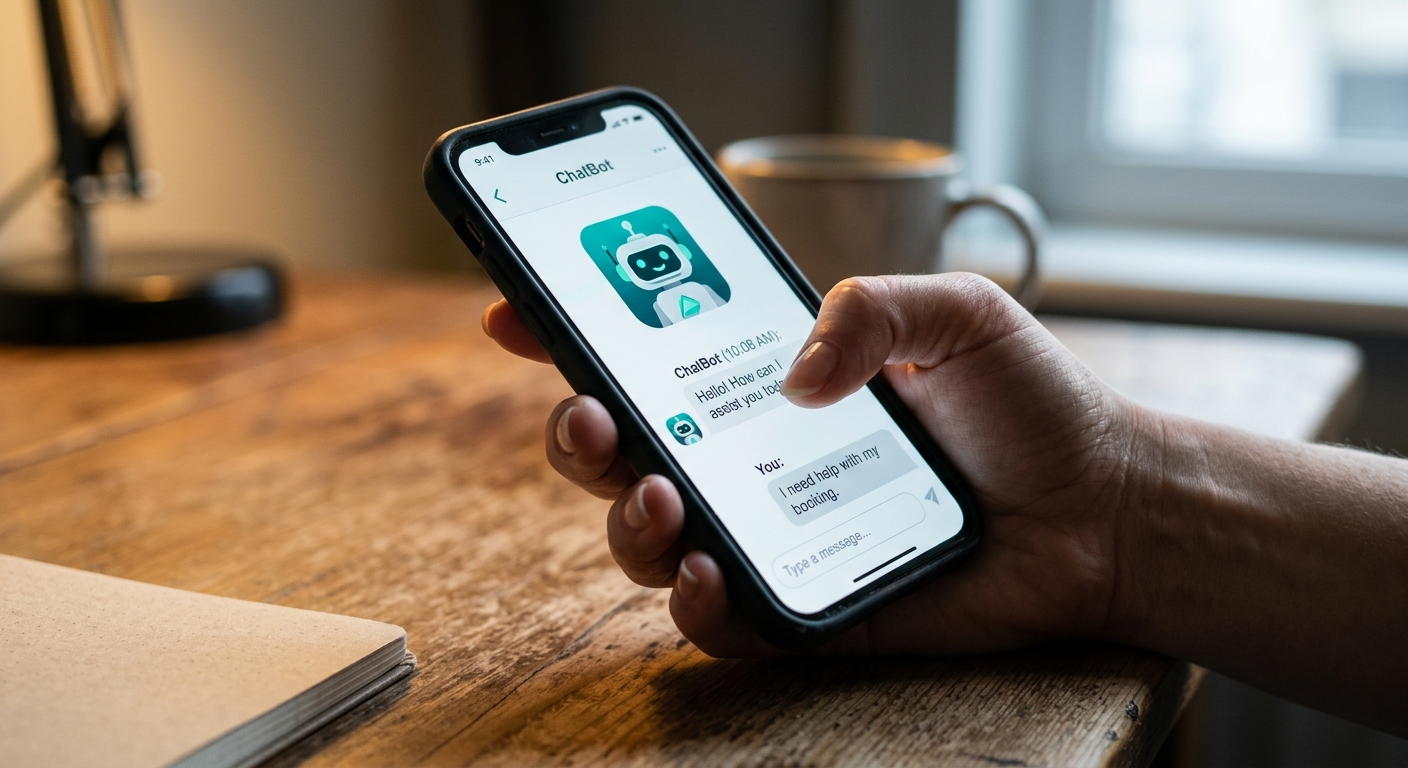
On March 5, 2026, Oregon's legislature passed Senate Bill 1546, widely described as the nation's toughest chatbot law. The bill now awaits Governor Tina Kotek's signature and would take effect January 1, 2027.
What SB 1546 Covers
The bill defines "AI companions" as systems that use artificial intelligence or algorithms to simulate sustained, human-like relationships by:
- Retaining information from prior interactions to personalize conversations
- Asking unprompted questions about emotional topics
- Sustaining ongoing dialogue about matters personal to the user
The definition of "operator" covers anyone who controls or makes available a covered AI system in Oregon, applying broadly across healthcare, financial services, education, and customer support.
Requirements for All Users
SB 1546 imposes several requirements on AI companion operators for users of all ages:
- AI disclosure: Operators must clearly disclose that users are interacting with AI, not a human
- Suicide intervention: Systems must detect signals of suicidal ideation or self-harm, interrupt the conversation, and direct users to crisis resources
- Safety protocols: Operators must maintain documented safety protocols
- Annual reporting: Operators must file annual reports with the Oregon Health Authority
Additional Protections for Minors
For users under 18, operators face stricter requirements:
- Provide hourly reminders that the user is interacting with AI
- Refrain from producing or displaying sexually explicit content
- Avoid techniques designed to create emotional dependency
- Avoid features that drive prolonged engagement
Private Right of Action
SB 1546 creates a private right of action with statutory damages of $1,000 for each violation. This means individual users can sue operators directly rather than relying solely on government enforcement, giving the law significant teeth.
HB 4153: Joint Task Force on Artificial Intelligence (2024)
In 2024, Oregon enacted House Bill 4153, establishing the Joint Task Force on Artificial Intelligence. The bill declared an emergency and took effect immediately.
Task Force Structure and Work
The 14-member task force was appointed by state officials and charged with examining AI-related terms and definitions that could be used in future legislation. The task force met nine times from June through December 2024, with members dividing into three workgroups to refine 30 AI-related terms.
The task force submitted its final report and recommendations to the legislature by December 1, 2024. This foundational work on AI definitions has informed subsequent Oregon legislation, including SB 1546.
Oregon Attorney General AI Guidance (December 2024)
On December 24, 2024, Oregon Attorney General Ellen Rosenblum published a comprehensive guidance document clarifying how existing Oregon laws apply to AI systems. The guidance, titled "What you should know about how Oregon's laws may affect your company's use of Artificial Intelligence," addresses four major areas.
Consumer Protection (Unlawful Trade Practices Act)
The guidance warns that AI systems generating inaccurate information to consumers may violate Oregon's Unlawful Trade Practices Act. Misrepresentations made by AI are actionable even if not made directly to a consumer or if the company did not intend the misrepresentation.
Data Privacy (Oregon Consumer Privacy Act)
Under the Oregon Consumer Privacy Act, AI developers must:
- Disclose whether personal data was used to train AI models
- Obtain express consent for use of "sensitive data" as defined by the Act
- Allow consumers to opt out of AI profiling when AI makes significant decisions about housing, education, or lending
- Ensure that retroactive or passive changes to privacy notices do not substitute for affirmative consent
Data Security (Oregon Consumer Information Protection Act)
AI developers that own, license, maintain, or otherwise possess personal information must comply with Oregon's data security requirements. This includes implementing an information security program and providing breach notification to consumers and the Attorney General.
Anti-Discrimination (Oregon Equality Act)
AI systems that produce biased outcomes harming individuals based on protected characteristics may trigger the Oregon Equality Act. The Act prohibits discrimination based on race, color, religion, sex, sexual orientation, gender identity, national origin, marital status, age, or disability in housing and public accommodation.
AI in Employment
Oregon has not enacted AI-specific employment legislation. However, the Attorney General's December 2024 guidance makes clear that existing anti-discrimination and consumer protection laws apply to AI-powered employment tools.
The Oregon Employment Department has begun implementing AI tools in its own operations to improve service delivery, though these initiatives are governed by internal policies rather than specific legislation.
Employers using AI in hiring decisions should ensure compliance with:
- The Oregon Equality Act (anti-discrimination)
- The Oregon Consumer Privacy Act (data handling)
- The Oregon Bureau of Labor and Industries (BOLI) workplace protections
Federal AI Policy and Oregon
Federal AI policy intersects with Oregon's regulatory efforts in several ways.
Executive Order 14365 (December 2025)
President Trump's Executive Order 14365 directs the Attorney General to identify state AI laws that "unduly impede" innovation. This creates potential tension with Oregon's AI companion regulation (SB 1546) and the Attorney General's aggressive enforcement guidance.
However, the executive order includes carve-outs for child safety measures, which could protect SB 1546's minor-protection provisions from federal preemption challenges.
Oregon's Position
Oregon has generally aligned with states asserting their authority to regulate AI within their borders. The state's approach of applying existing consumer protection and anti-discrimination laws to AI, rather than creating entirely new regulatory frameworks, may prove more resistant to federal preemption challenges than comprehensive AI statutes in other states.
Summary of Oregon AI Laws and Actions
| Law/Action | Year | Status | Topic | Key Provision |
|---|---|---|---|---|
| HB 4153 | 2024 | Enacted | AI definitions | Created Joint Task Force on AI terminology |
| SB 1571 | 2024 | Enacted | Political deepfakes | Requires disclosure in campaign communications (ORS 260.345) |
| AG AI Guidance | 2024 | Active | Compliance | Clarifies existing laws apply to AI systems |
| HB 2299 | 2025 | Enacted (Jan. 1, 2026) | Intimate image deepfakes | Expands ORS 163.472 to include AI-generated images |
| HB 2748 | 2025 | Enacted (Jan. 1, 2026) | Healthcare AI | Bans AI from using nursing titles (first in nation) |
| SB 1546 | 2026 | Passed legislature, awaiting governor | AI companions | Chatbot safety rules with private right of action |
More Oregon Laws
Explore other Oregon law topics on Recording Law:
Sources and References
- Oregon SB 1571 testimony on AI in campaign communications(oregonlegislature.gov).gov
- Enrolled House Bill 2299 (intimate image deepfakes)(oregonlegislature.gov).gov
- Oregon House press release on HB 2299 deepfake pornography ban(oregonlegislature.gov).gov
- Enrolled House Bill 2748 (AI nursing title ban)(oregonlegislature.gov).gov
- HB 4153 AI Task Force overview(oregonlegislature.gov).gov
- Joint Task Force on AI final report and recommendations(oregonlegislature.gov).gov
- Oregon Attorney General AI Guidance (December 2024)(doj.state.or.us).gov
- Legislature Acts on AI and Youth Mental Health(oregonlegislature.gov).gov
- Executive Order 14365 on AI state preemption(whitehouse.gov).gov
- TCAI Bill Guide on Oregon SB 1546(transparencycoalition.ai)
- Oregon legislature passes AI companion bill with private right of action(troutmanprivacy.com)
- Oregon Attorney General AI guidance analysis(hunton.com)
- Oregon becomes first state to ban AI from using nurse title(nurse.org)
- New Oregon law criminalizing explicit AI images takes effect(koin.com)
- Rep. Mannix press release on AI-generated sexual images ban(oregonlegislature.gov).gov