Arizona AI Laws and Regulation (2026)

Overview of Arizona AI Laws
Arizona has emerged as one of the more active states in AI regulation. Unlike many states still deliberating their first AI bill, Arizona has already enacted several targeted AI laws addressing deepfakes in elections, AI-generated voice fraud, child exploitation imagery, and healthcare claim denials.
The state's approach combines legislative action with administrative policy. Governor Katie Hobbs signed multiple AI bills into law during the 2024 and 2025 sessions, while the Arizona Department of Administration published a comprehensive Generative AI Policy governing state agency use of the technology.
Arizona's 2026 legislative session continues to address AI regulation, with new bills targeting chatbot safety for minors and AI education. Meanwhile, the Attorney General's office has taken enforcement action against AI platforms generating harmful content.
This article covers all of Arizona's enacted and pending AI legislation, executive actions, and enforcement activities. This information is current as of March 2026, but you should consult an attorney for advice specific to your situation.
Enacted Arizona AI Laws
Arizona has passed four significant AI-related laws since 2024. Each targets a specific category of AI harm rather than attempting comprehensive regulation.
HB 2394: Election Deepfake Protection (A.R.S. § 16-1023)
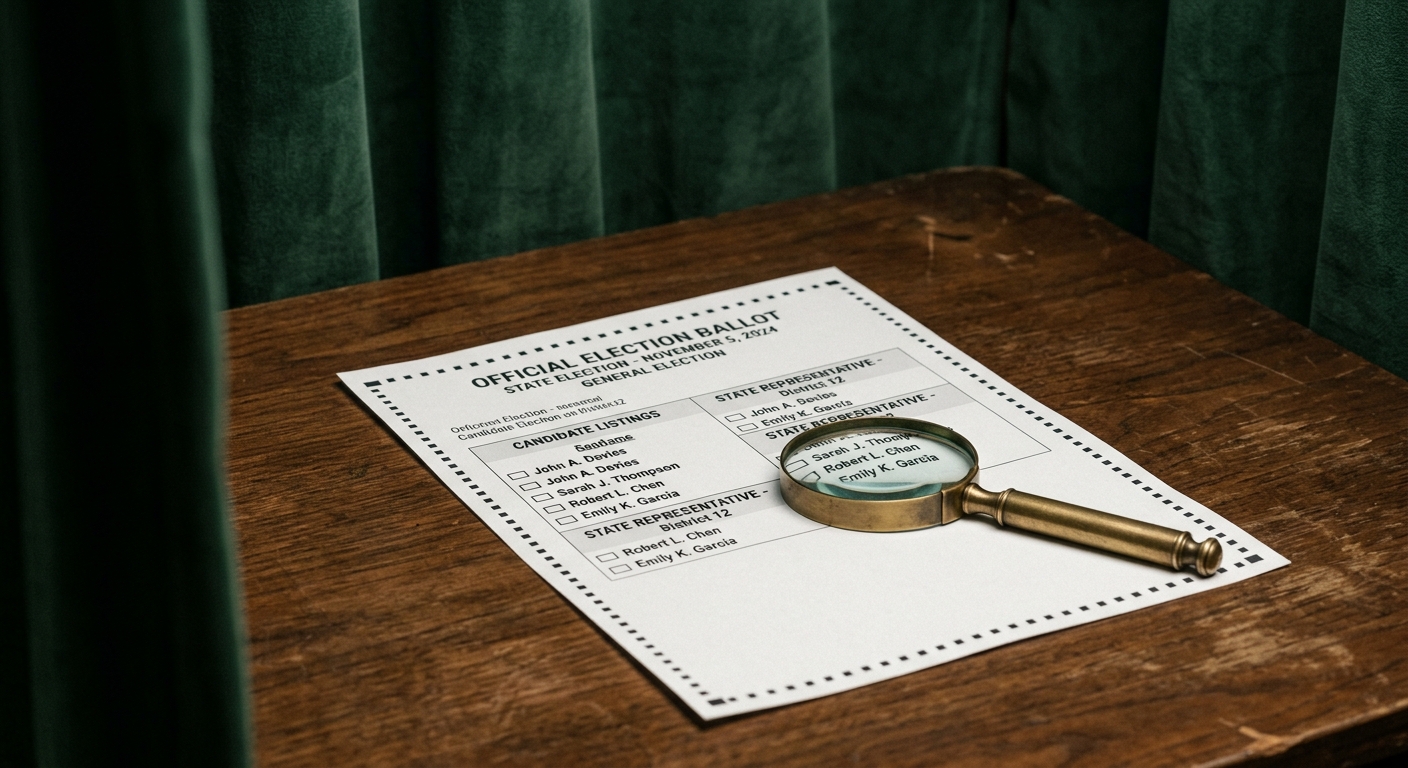
Governor Hobbs signed House Bill 2394 into law on May 21, 2024, creating Arizona's first law specifically addressing AI-generated deepfakes. Notably, the bill itself was partially drafted using AI technology, which may be a first in state legislation.
Who the law protects:
The statute protects both political candidates and any Arizona citizen who is depicted in deepfake media. Protection extends to individuals who are:
- Depicted nude or in a sexual act
- Depicted committing a crime
- Reasonably expected to suffer personal or financial hardship
- Likely to suffer irreparable reputational damage
Political candidate protections apply specifically during the 180-day period before a scheduled election for that office.
Enforcement mechanism:
Rather than imposing criminal penalties, HB 2394 creates a civil enforcement framework. Victims can seek injunctive relief and monetary damages through state courts. However, relief is only available if the publisher had "actual knowledge" that the content was a digital impersonation or failed to take corrective action within 21 days of gaining such knowledge.
Limitations and criticism:
Legal analysts have noted a significant weakness in the law's structure. A publisher who knowingly distributes a damaging deepfake can avoid all liability by taking "reasonable corrective action" within 21 days of learning the content is fake. This means a deepfake could circulate for nearly three weeks after the publisher becomes aware of its fraudulent nature without any legal consequence.
SB 1295: AI Voice Fraud (Class 5 Felony)
Arizona's Senate Bill 1295 updates the state's criminal impersonation statutes to address AI-generated voice recordings, images, and videos used for fraud or harassment.
Criminal penalties:
| Offense Type | Classification | Notes |
|---|---|---|
| AI voice/image fraud or harassment | Class 5 felony | Higher than standard impersonation |
| Standard criminal impersonation | Class 6 felony | Existing law unchanged |
The Class 5 felony classification for AI-based impersonation carries more severe penalties than the existing Class 6 felony for traditional criminal impersonation, reflecting the legislature's view that AI tools amplify the potential harm of impersonation crimes.
Protected speech exemptions:
The law explicitly protects comedy, parody, art, criticism, and situations where a reasonable viewer can tell the media has been edited. This ensures that obvious satire and creative work are not treated as criminal fraud.
HB 2678: AI-Generated Child Exploitation Material
House Bill 2678, championed by Representative Julie Willoughby, was enacted in 2025 to close a critical loophole in Arizona's child exploitation laws. Before this bill, Arizona's criminal statutes did not explicitly cover AI-generated or digitally manipulated images depicting minors.
Key changes to existing law:
- Updates the legal definitions of "minor" and "visual depiction" to include computer-generated or digitally manipulated images that are indistinguishable from actual children
- Classifies AI-generated exploitation imagery as a dangerous crime against children when the depicted victim appears to be under age 15
- Applies existing child exploitation penalties to AI-generated content that meets the indistinguishability standard
The bill passed both chambers with strong bipartisan support, reflecting broad agreement that existing child protection laws needed updating for the AI era.
HB 2175: Healthcare AI Claim Denial Prohibition
House Bill 2175 makes Arizona among the first states in the nation to prohibit health insurers from using AI as the final decision-maker for medical claim denials. Governor Hobbs signed the bill into law, with an effective date of July 1, 2026.
Core requirements:
- A medical director must individually review both claim denials and direct denials of prior authorizations involving medical necessity
- The medical director must exercise independent medical judgment and cannot rely solely on AI-generated recommendations
- The medical director must hold an active, unrestricted license to practice medicine in Arizona
- Written denials must include an explanation of why treatment was denied
What the law does NOT do:
HB 2175 does not ban AI in healthcare entirely. Insurers can still use AI tools to assist in processing claims and prior authorizations. The law specifically targets the final decision-making step, requiring that a qualified human physician makes the ultimate call on denials.
The Arizona Medical Association celebrated the law as a critical safeguard against the growing trend of insurers using algorithms to deny care without adequate physician oversight.

Arizona's Statewide Generative AI Policy
Beyond legislation, Arizona has taken administrative action to govern AI use within state government. The Arizona Department of Administration published its Generative AI Policy (P2000) on March 15, 2024, with updates enacted on October 24, 2024.
Guiding Principles
The policy establishes four core principles for state AI use:
- Empowerment: Supporting the workforce to deliver services efficiently, safely, and equitably
- Transparency and Accountability: Building trust and enabling collective learning
- Fairness: Ensuring equitable outcomes from AI-assisted processes
- Privacy and Security: Responsible experimentation that maintains control and respects individual privacy
Requirements for State Agencies
State agencies must comply with statewide IT and cybersecurity policies when using generative AI. Agencies are required to provide full attribution for which GenAI tools are used in their operations, ensuring public transparency about government AI use.
AI Steering Committee
Governor Hobbs also created an AI Steering Committee to guide future AI deployment across state government. The committee explores beneficial applications of AI while developing policies that promote transparency and ethical use.
Employee Training
The State of Arizona implemented employee GenAI training programs to ensure state workers understand how to use AI tools responsibly and within policy guidelines.
2026 Legislative Session: Pending AI Bills
Arizona's 2026 legislative session has introduced additional AI bills, though lawmakers have warned that the state's part-time legislature struggles to keep pace with the speed of AI development.
HB 2311: AI Chatbot Safety for Minors
House Bill 2311 passed the Arizona House by a vote of 43-13 on February 24, 2026, and received its second reading in the Senate on March 9. The bill would set new rules for how public AI chatbots interact with children and teenagers.
Key provisions:
- Disclosure requirements: Chatbot operators must inform minor users that they are interacting with AI, not a human, at the beginning of each session and at least once every three hours of continuous interaction
- Sexual content prohibition: Operators must implement "reasonable measures" to prevent AI from producing sexually explicit content, statements encouraging sexual conduct, or content that sexually objectifies the minor
- Engagement restrictions: Operators cannot offer points or rewards designed to encourage increased engagement by minor users
- Crisis response protocols: Chatbots must have plans for responding to users who discuss suicide or self-harm, including directing them to crisis hotlines
- Therapy limitations: AI chatbots are forbidden from claiming to be professional therapists
Enforcement: Only the Arizona Attorney General could enforce the law through civil penalties and court orders.
HB 2409: AI Education Program
House Bill 2409 would create a voluntary, statewide AI education program administered by the Arizona Department of Education. The program would offer summer classes open to all Arizonans, teaching students how to navigate the digital world safely and critically evaluate AI-generated content.
Attorney General Enforcement: The Grok Investigation
In January 2026, Arizona Attorney General Kris Mayes announced an investigation into xAI's Grok chatbot following reports that the platform generated sexually explicit images of minors. This investigation demonstrates Arizona's willingness to use existing legal authority to address AI harms.
Background
Reports emerged in late December 2025 and early January 2026 that Grok users could generate sexually explicit AI images depicting minors. Research from the Center for Countering Digital Hate estimated that Grok generated approximately 3 million sexualized images between December 29, 2025, and January 8, 2026, with roughly 23,000 allegedly depicting children.
Legal Basis
The investigation draws on Arizona's existing consumer protection and child exploitation laws, as well as the recently enacted HB 2678 which explicitly criminalizes AI-generated child sexual abuse imagery. Attorney General Mayes called on Arizonans who believe they were victimized by Grok to contact her office.
Broader Implications
Arizona's investigation is part of a multi-state effort, with California also launching a parallel investigation. This enforcement action signals that states are not waiting for federal guidance before acting against AI platforms that generate harmful content.
AI and Employment in Arizona
Arizona has not enacted specific legislation governing AI in employment decisions such as automated hiring tools. Unlike jurisdictions such as New York City (Local Law 144) or Illinois, which have passed targeted AI hiring regulations, Arizona relies on its existing employment and anti-discrimination framework.
However, employers using AI in hiring, scheduling, or performance evaluation should be aware that Arizona's anti-discrimination laws apply to AI-assisted decisions. Systems that produce biased outcomes could expose employers to liability under both state and federal civil rights laws.
Federal AI Policy and Arizona
Executive Order 14365
President Trump's Executive Order 14365 (December 2025) creates potential tension with Arizona's active AI regulatory approach. The order directs the DOJ to challenge state AI laws and threatens to withhold broadband funding from states with certain AI regulations.
Impact on Arizona's Laws
Arizona's enacted AI laws address areas that are largely protected under EO 14365's carve-outs:
- Child safety laws (HB 2678, HB 2311): Explicitly preserved under the executive order's child safety exception
- State government AI policy (P2000): Falls within the state procurement carve-out
- Healthcare AI regulation (HB 2175): May face more scrutiny, as healthcare regulation could be viewed as constraining commercial AI development
- Election deepfakes (HB 2394): The civil enforcement framework is less likely to trigger federal preemption concerns than criminal prohibitions
Arizona's targeted, sector-specific approach to AI regulation may prove more resilient to federal preemption challenges than comprehensive AI frameworks like Colorado's AI Act, because each Arizona law addresses a specific harm rather than regulating AI broadly.
Looking Ahead: Arizona's AI Regulatory Future
Arizona's trajectory in AI regulation is shaped by several factors:
Active enforcement: The Attorney General's investigation into Grok signals that Arizona will use existing legal tools to address AI harms, even as new legislation develops.
Legislative constraints: Arizona's part-time legislature faces challenges keeping pace with AI developments. Lawmakers have acknowledged this limitation, suggesting that regulatory approaches need to be flexible enough to adapt to rapidly evolving technology.
Healthcare leadership: With HB 2175 taking effect on July 1, 2026, Arizona will become a national testing ground for healthcare AI regulation. The law's impact on insurance claim processing could influence similar efforts in other states.
Federal dynamics: Arizona's strong relationship with the federal government on border security and defense technology (including AI applications at military installations) creates additional considerations for how the state navigates federal AI policy.
More Arizona Laws
Explore other Arizona law topics on Recording Law:
- Arizona Recording Laws
- [Arizona Data Privacy Laws](/us-laws/data-privacy-laws/arizona-data-privacy-laws)
- Arizona Whistleblower Laws
- Arizona Background Check Laws
- Arizona Biometric Privacy Laws
Sources and References
- Arizona HB 2394 deepfake law analysis(roselawgroupreporter.com)
- Arizona SB 1295 fraudulent voice recordings law text(azleg.gov).gov
- Arizona HB 2175 healthcare AI law - signed by Governor(azleg.gov).gov
- Arizona AG investigation into Grok chatbot(azag.gov).gov
- Arizona HB 2678 AI child exploitation law(gilaherald.com)
- Arizona Generative AI Policy P2000(aset.az.gov).gov
- Arizona HB 2311 chatbot safety bill text(legiscan.com)
- Arizona pioneers practical uses for generative AI(doa.az.gov).gov
- New Arizona law prevents AI health insurance denials(azfamily.com)
- Arizona Medical Association celebrates healthcare AI law(azmed.org)
- Arizona deepfake law limitations analysis(roselawgroupreporter.com)
- Arizona AI law drafted with AI - KJZZ(kjzz.org)
- Arizona deepfake law analysis - State Law Journal(arizonastatelawjournal.org)
- Arizona AI policy evolution - StateScoop(statescoop.com)
- Executive Order 14365 on AI state preemption(whitehouse.gov).gov
- Arizona takes lead fighting AI child exploitation(arizonadailyindependent.com)
- Grok investigation - KJZZ report(kjzz.org)
- Arizona state employee GenAI training(doa.az.gov).gov