Hit and Run Laws in the United States (2026 Guide)
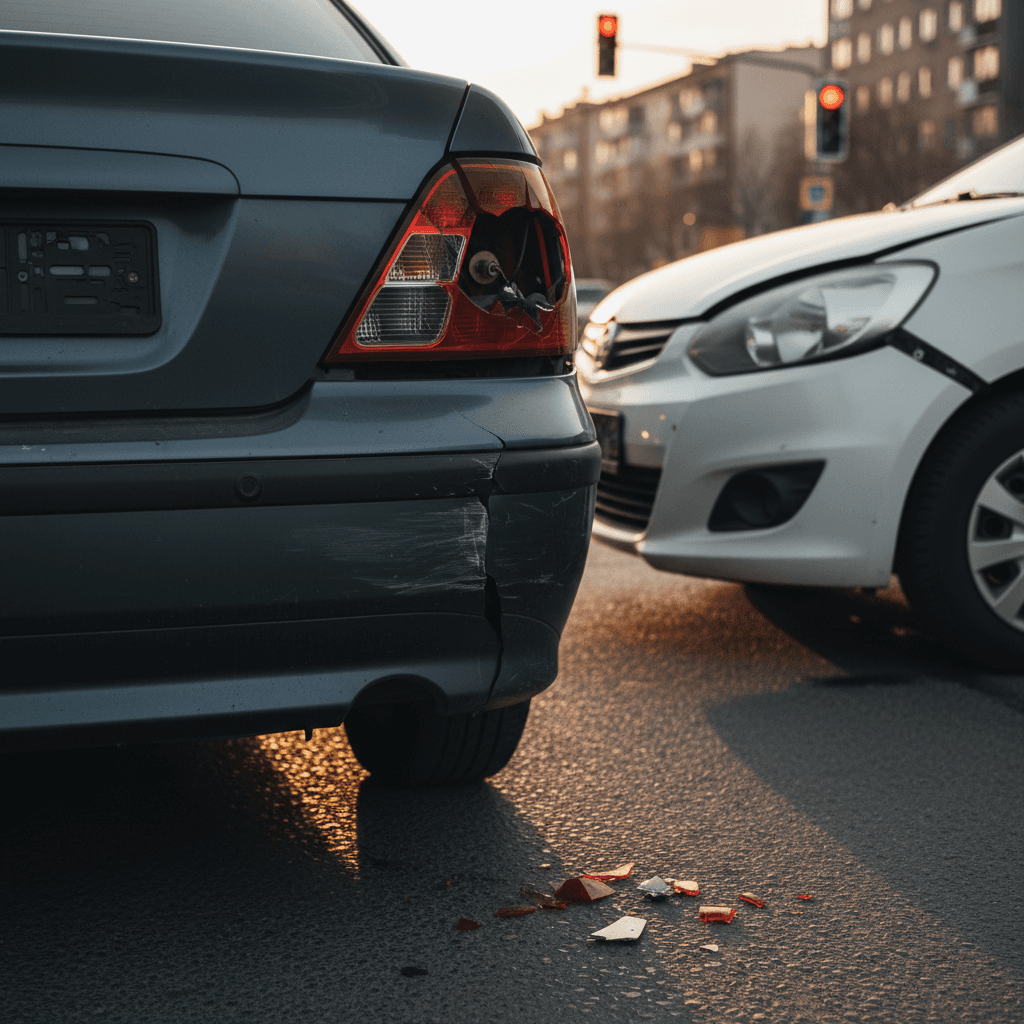
Hit-and-run laws require every driver involved in a traffic crash to stop, identify themselves, and help anyone who is injured. Leaving the scene transforms what might have been a minor traffic violation or no-fault accident into a criminal offense that can carry years in prison.
Every state and the District of Columbia has hit-and-run statutes. The penalties vary widely depending on the severity of the crash, but the legal duty is universal: if you are involved in a collision, you are required to stop.
What the Law Requires
Duty to Stop
Every state requires the driver of any vehicle involved in a crash to stop immediately at the scene or as close to the scene as safely possible without obstructing traffic. This applies whether the crash involves another vehicle, a pedestrian, a cyclist, a parked car, or fixed property.
Duty to Exchange Information
After stopping, drivers must provide:
- Full name and current address
- Driver's license number
- Vehicle registration number
- Insurance carrier and policy number
If the other driver or property owner is not present, most states require the driver to leave a written note with this information in a conspicuous place on the damaged vehicle or property.
Duty to Render Aid
When a crash involves injuries, drivers must provide reasonable assistance to injured persons. This includes calling 911, administering basic first aid if trained to do so, and arranging transportation to a medical facility when necessary.
Duty to Report
Drivers must report the crash to the nearest law enforcement agency. Most states require reporting "immediately" or "as soon as reasonably possible." Failing to report a crash, even after stopping and exchanging information, can result in separate charges.
Penalty Overview by Crash Severity
Nearly every state uses a tiered penalty structure based on the severity of the crash.
| Crash Severity | Typical Classification | Typical Penalty Range |
|---|---|---|
| Property damage only | Misdemeanor | Fine plus up to 6-12 months jail |
| Minor injury | Misdemeanor or low felony | 6 months to 5 years |
| Serious bodily injury | Felony | 1 to 10 years |
| Death | Felony (often high-degree) | 2 to 15 years, some with mandatory minimums |
States with the Harshest Penalties
Florida
Florida imposes some of the toughest hit-and-run penalties in the country under Fla. Stat. 316.027. A fatal hit-and-run is a first-degree felony carrying a mandatory minimum of 4 years in prison. Serious bodily injury triggers second-degree felony charges. Florida also enhances sentences when victims are "vulnerable road users" such as pedestrians, cyclists, and wheelchair users.
Michigan
Michigan punishes fatal hit-and-run with up to 15 years in prison and a $10,000 fine under MCL 257.617a. The Secretary of State must suspend the driver's license upon conviction.
Vermont
Vermont matches Michigan with up to 15 years in prison for fatal hit-and-run under 23 V.S.A. 1128, along with a minimum of 1 year. Even a basic hit-and-run violation carries up to 2 years.
Pennsylvania
Under 75 Pa.C.S. 3742, Pennsylvania imposes a mandatory minimum of 3 years and a mandatory $2,500 fine for fatal hit-and-run. Courts cannot impose less than these minimums.
Massachusetts
Fatal hit-and-run carries 2.5 to 10 years in state prison under Mass. Gen. Laws ch. 90, 24. At least 1 year of the sentence cannot be suspended or paroled.
Virginia
Virginia Code 46.2-894 sets an unusually low threshold for felony charges. Property damage exceeding just $1,000 triggers a Class 5 felony carrying 1 to 10 years in prison. Given current repair costs, most vehicle-involved hit-and-runs in Virginia qualify as felonies.
Hit-and-Run Statistics
Hit-and-run crashes represent a growing crisis on American roads.
| Statistic | Figure | Source |
|---|---|---|
| Total hit-and-run crashes per year (est.) | 737,100 (approximately one every 43 seconds) | AAA Foundation (2015 data) |
| Pedestrian hit-and-run deaths (2023) | 1,818 | IIHS/FARS |
| Share of pedestrian deaths from hit-and-runs (2023) | 25% | IIHS |
| Share of pedestrian deaths from hit-and-runs (2014) | 19% | IIHS |
| Total US traffic fatalities (2023) | 40,901 | NHTSA/FARS |
Pedestrian hit-and-run fatalities nearly doubled between 2014 (953 deaths) and 2023 (1,818 deaths). The proportion of all pedestrian deaths caused by hit-and-runs rose from 19% to 25% during the same period.
Hit-and-Run Laws by State
Select your state for a detailed guide to penalties, reporting requirements, and what to do after a hit-and-run.
Canadian Provinces
| Province | Province |
|---|---|
| Alberta | Nova Scotia |
| British Columbia | Ontario |
| Manitoba | PEI |
| New Brunswick | Quebec |
| Newfoundland | Saskatchewan |
Also see: Canada Hit and Run Laws (national overview)

What to Do After a Hit-and-Run
If You Are the Driver
- Stop immediately at the scene or as close as safely possible
- Turn on hazard lights and move to the shoulder if you can do so safely
- Call 911 if anyone is injured
- Provide reasonable aid to injured persons
- Exchange your name, address, license number, registration, and insurance information with the other parties
- Wait for police to arrive when injuries are involved
- Document the scene with photos and gather witness contact information
- Report the crash to your insurance company promptly
If You Are the Victim
- Do not chase the fleeing driver
- Note whatever details you can: license plate (even partial), vehicle make, model, color, direction of travel, driver description
- Call 911 immediately
- Get medical attention even if injuries seem minor
- Take photos of all damage, injuries, and scene conditions
- Collect names and phone numbers from any witnesses
- File a police report as soon as possible
- Contact your insurance company to start a claim
- Check for surveillance cameras at nearby businesses that may have captured the incident
If You Hit an Unattended Vehicle or Property
- Stop and attempt to locate the owner
- Leave a written note in a visible location with your name, address, phone number, and a description of what happened
- Report the incident to police
- Take photos of the damage and your note
How Hit-and-Run Affects Insurance
Insurance treats hit-and-run drivers as uninsured because they cannot be identified. If you are the victim, your own insurance coverage determines your protection.
Key Coverage Types
| Coverage Type | What It Covers | Required? |
|---|---|---|
| Collision | Vehicle damage from the hit-and-run (you pay your deductible) | Optional in most states |
| Uninsured Motorist Bodily Injury (UMBI) | Medical bills, lost wages, pain and suffering | Required in ~20 states |
| Uninsured Motorist Property Damage (UMPD) | Vehicle repairs (some states exclude hit-and-run) | Varies by state |
| Medical Payments (MedPay) | Medical expenses regardless of fault | Optional |
| Personal Injury Protection (PIP) | Medical expenses, lost wages in no-fault states | Required in ~12 states |
About 15.4% of motorists in the United States are uninsured. Filing a hit-and-run claim as a victim generally does not raise your premiums because you were not at fault, though practices vary by insurer.
Common Defenses
Drivers charged with hit-and-run may raise several defenses:
- Lack of knowledge: The driver did not know a collision occurred. This is the most commonly raised defense, particularly for large vehicles where minor impacts may go unnoticed.
- Safety concerns: The driver left because remaining at the scene posed a genuine safety threat. Most statutes permit reporting later if staying is dangerous.
- Incapacitation: The driver's own injuries prevented compliance with stop-and-report duties.
- Mistaken identity: The defendant was not the driver involved in the crash.
Voluntarily returning to the scene or self-reporting to police may serve as a mitigating factor at sentencing, but it does not negate the underlying charge.
Sources and References
- NHTSA - Hit and Run Data and Safety Resources(nhtsa.gov).gov
- IIHS - Pedestrian Fatality Facts(iihs.org)
- Florida Statutes 316.027 - Crash Involving Death or Personal Injuries(flsenate.gov).gov
- California Vehicle Code 20001 - Hit and Run with Injury(leginfo.legislature.ca.gov).gov
- Virginia Code 46.2-894 - Duty to Stop at Scene(law.lis.virginia.gov).gov
- Pennsylvania 75 Pa.C.S. 3742 - Accidents Involving Death or Injury(legis.state.pa.us).gov
- USAGov - Car Accidents and Crash Reports(usa.gov).gov
- AAA Foundation - Hit-and-Run Crashes Study(aaafoundation.org)